

Editor’s note: In my 30-something years of life, many of which in mainland China where my access to information largely isolated from the rest of the world by the Great Firewall, I only had a few fleeting moments of true unity, and this is one of them.
I still remember the postcard exchange program in early 2000s that brought me a wintery image and handwritten greetings from Ohio, the excitement when I found American Idol contestants on Facebook in 2008, and more recently, in 2021, when I spoke in a chatroom on audio-based Clubhouse, where users from mainland China and Taiwan took turns discussing cross-strait issues. It was an electrifying feeling that I was connected to the world, which gradually shaped my belief that when humans converse with one another, we can resolve all differences.
My op-ed below first appeared on Time Ideas today. Since last week, I’ve also seen some brilliant analyses of the great digital migration, which I’m linking in the titles below in 3 sections: general reading and lists, internet culture and implications.
👉General reading and lists👈
The Lure of Chinese App Red Note, Yaling Jiang
“During a recent layover in Tokyo from China to the U.S., as I was planning the ramen spot I was going to hit and friends I wanted to catch up with, I was stopped by a middle-aged border agent. “This is Japan, you need a visa,” he said sternly.
I knew I didn’t need one according to official rules, but I didn’t speak Japanese to argue with him. As I turned back, thinking that I had to live like Tom Hanks in The Terminal before my next flight, I searched on Red Note. Thanks to multiple posts by people who had been in the exact same situation, I learned that I had to go to a specific counter by the corner and ask for a “shore pass.” I was able to enter Japan for 72 hours instead of sleeping on a bench in my 30s.
That’s the kind of obscure situation Red Note has saved people out of…”
👀 You can read the rest here. Plus our reported piece by Luna Huang Ruomin, edited by Bibek Bhandari.
I’ve predicted a clampdown on Xiaohongshu content in my 2025 forecasts, now it definitely would come sooner. If you search the archive of this newsletter, you will also see other trends that initiated from the platform, including “Why is Xiaohongshu the best platform for web3 mass adoption in China?”
Engaging with Xiaohongshu (RED/REDnote/LittleRedBook): A Reading List, Qian Huang & Carwyn Morris
“In the mold of other reading lists and bibliographies that have inspired us (see Digital Ethnography Collective Reading List, TikTok Researcher Network, and Doing Fieldwork in a Pandemic), and given the recent attention that Xiaohongshu has received from the public, the media, and by scholars, we decided to crowdsource a short reading list featuring scholarship that engages with Xiaohongshu in a variety of ways. This reading list includes suggestions by numerous friends and colleagues and we thank them for their support.”
👉Internet culture👈
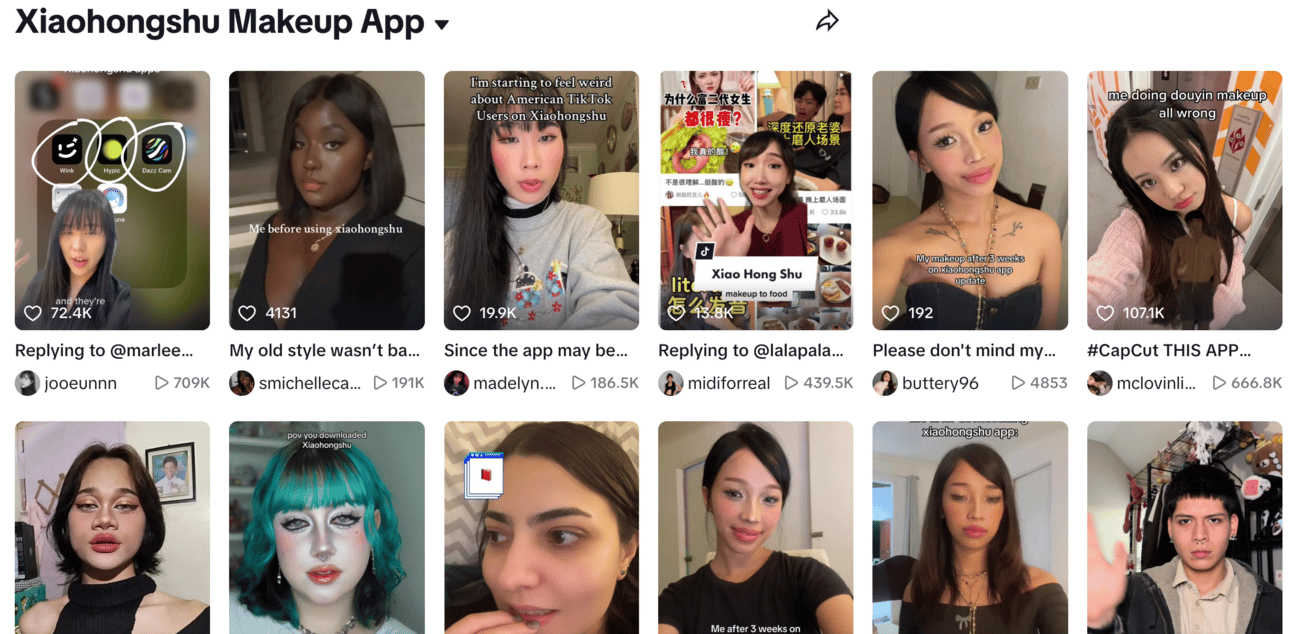
America's youth longs for Chinese e-commerce (which answers ‘Who Started The Great Xiaohongshu Migration?’), Ryan Broderick of Garbage Day
“According to Google search caches, accounts such as @the_ronin_sage and @smashleyboyd were first to use the #TikTokRefugees and #rednote hashtags on Monday. And in the case of @smashleyboyd, in her first video about RedNote, she explained that she had already heard about the app because, ‘all the black girlies were on here talking about how it is over there and it is, indeed, cute as shit over there.’”
Chinese internet as an identity, Yiwen Lu of Uncool Kids
“Back in the beginning of 2024, when the threat of a TikTok ban wasn’t imminent, I talked to a long-term product executive about why there couldn’t be an app like XHS in the US. His argument, which I agreed, was that XHS is a platform that targets a very specific demographic: women in their 20s and 30s who, if not affluent, live a reasonably comfortable life in first and second-tier cities in China. That is not the main demographic of any platform in the US.”
👉Implications👈
What is happening on RED?, Jack Porteous of Tong Global
“The path to social change in China is different. RED has been a useful platform for discussion around issues from abortion rights, gender equality, and other feminist issues in particular. Members of the LGBT community have been able to make connections and find each other. Meme formats and intricate linguistic codes are used to express dissatisfaction with work culture, traditional familial expectations, and more. In its own way this is quietly radical.”

TikTok refugees flocking to Red Note: what it signifies for China's global "soft power" and economy, Amber Zhang of Baiguan - China Insights, Data, Context
“This is a rare and valuable chance for China to directly connect with global consumers and showcase its culture authentically—an opportunity made even more precious by today's U.S.-China narrative, which often focuses on decoupling, portrays China as an adversary, and reduces Chinese products to the stereotype of being merely cheap copycats.
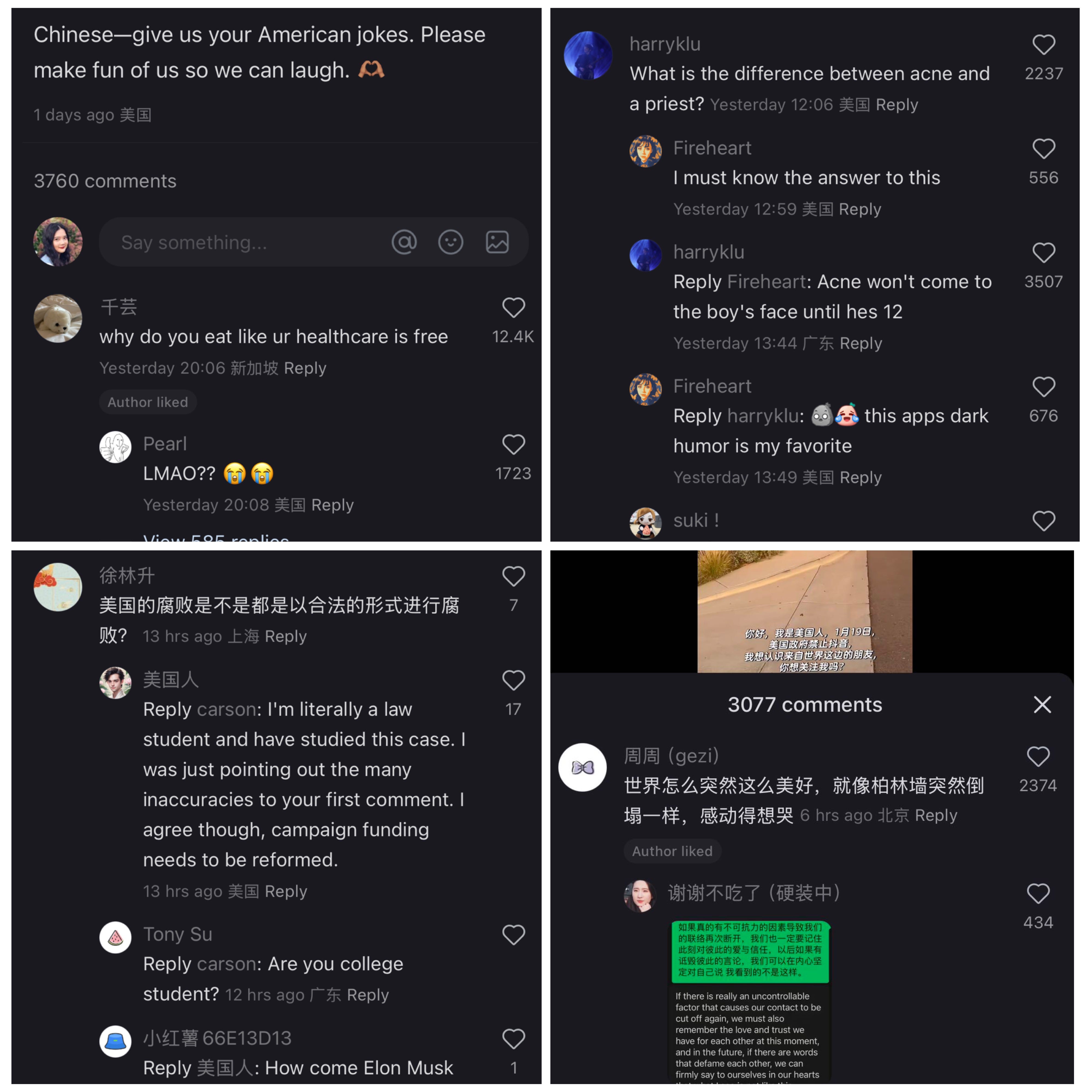
Could this be the fall of the ‘cyber Berlin Wall’?”

The Great Digital Migration: How TikTok's (Potential) Ban Led Americans to China's Social Media Shore, Olivia Plotnick of who what wai published on LinkedIn
“What makes this moment particularly remarkable is not just the willingness of American users to overcome significant language and cultural barriers to access a Chinese platform, but the timing and implications of this digital exodus.” 15 Red Note stories in one piece — truly commendable.
5 scenarios showing the REDnote refugee trend (unfortunately) won’t end well, Ed Sander of ChinaTechTrip, Tech Buzz China and ChinaTalk
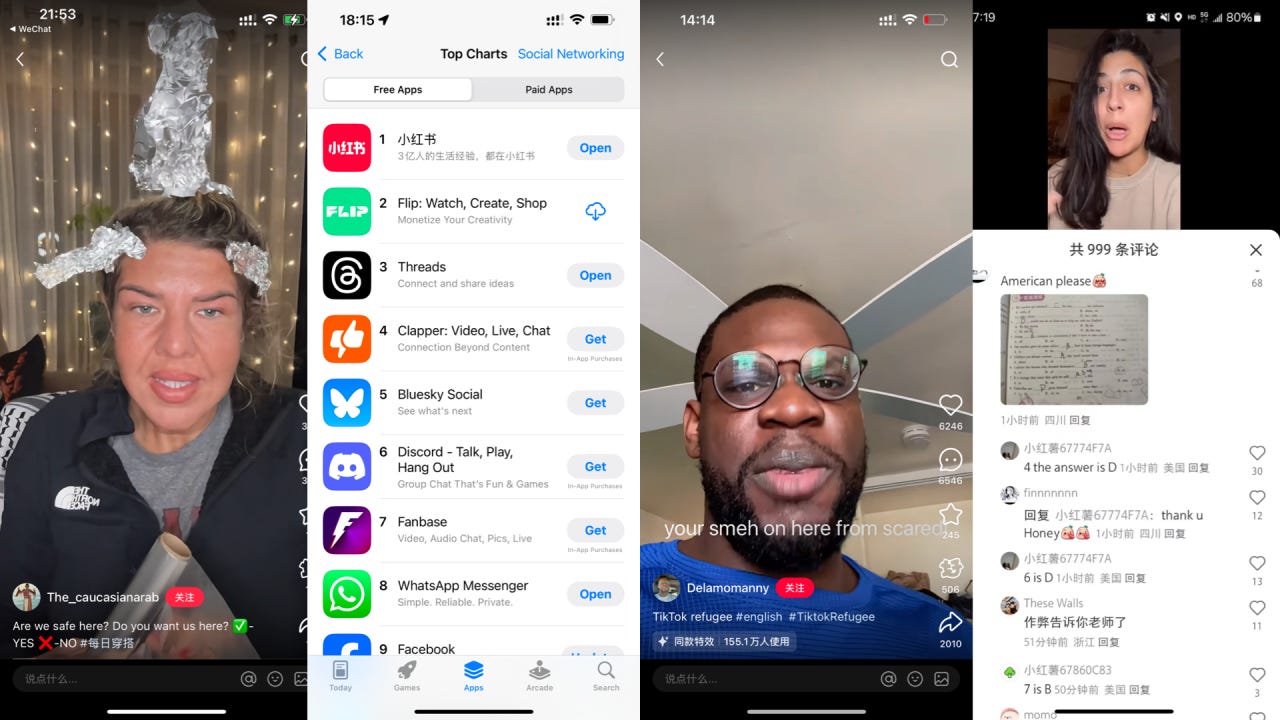
“Some people start messing things up for those with good intentions, as often happens on social media. Americans are already posting racial content and being called out to behave by the well-meaning ones. Some have already started showing off their guns on Xiaohongshu, something I can’t imagine the censors being happy about, while it also reinforces prejudices that the Chinese have about the Americans.”

Last but not least, it’s time for you to register an account there!
There is so much to unpack on the surprising rise of XHS as a destination for Tiktok refugees.
XHS is definitely not a logical or long term solution as a tiktok replacement.
What it probably suggests is two things.
- the first is that user preference for Meta is low. Instagram reels is the most like for like alternative, yet from what I see there's widespread reluctance to migrate there. Instead preferring to choose options that are less like for like. For example XHS. Alarm bells should be ringing for Meta investors.
- there is a sentiment of unhappiness with the US government. "sticking it to the man" by moving from one Chinese influenced platform to... Another Chinese influenced platform. In history, nothing ever came good of young adults unhappy with the current regime. They're most likely to have nothing to lose, idealogical driven, and have time and energy on their hands. To fuel a mass uprising.
Great to see you published in Time Magazine and well-deserved!