

Key takeaways:
Analysts see the migration as a business opportunity for both Chinese and international creators, as well as Xiaohongshu.
Xiaohongshu is likely to serve as a window to China for U.S. and other English-speaker users, but it is also facing increased scrutiny from the Chinese government.
For many users such as 18-year-old Steve Que, it is“the first time” that he felt “such an international atmosphere on Chinese social media”.
With TikTok’s future uncertain in the United States due to a Supreme Court decision that risks a ban in the coming days, many American users are migrating digitally to a lesser-known Chinese platform: Xiaohongshu.
Though new to U.S. users, Xiaohongshu — often referred to as “Red Note” — is one of the most popular social media sites in China, with over 300 million monthly users. Initially launched in 2013 as China’s answer to Instagram, it has since evolved into a go-to site for young Chinese seeking advice on everything from fashion and travel to career counseling.
On Monday, Xiaohongshu became the number one downloaded app on Apple’s U.S. app store. The digital migrants are calling themselves “TikTok refugees” in a move similar to the influx of X users to platforms such as Mastodon and Bluesky after Elon Musk’s Twitter takeover.
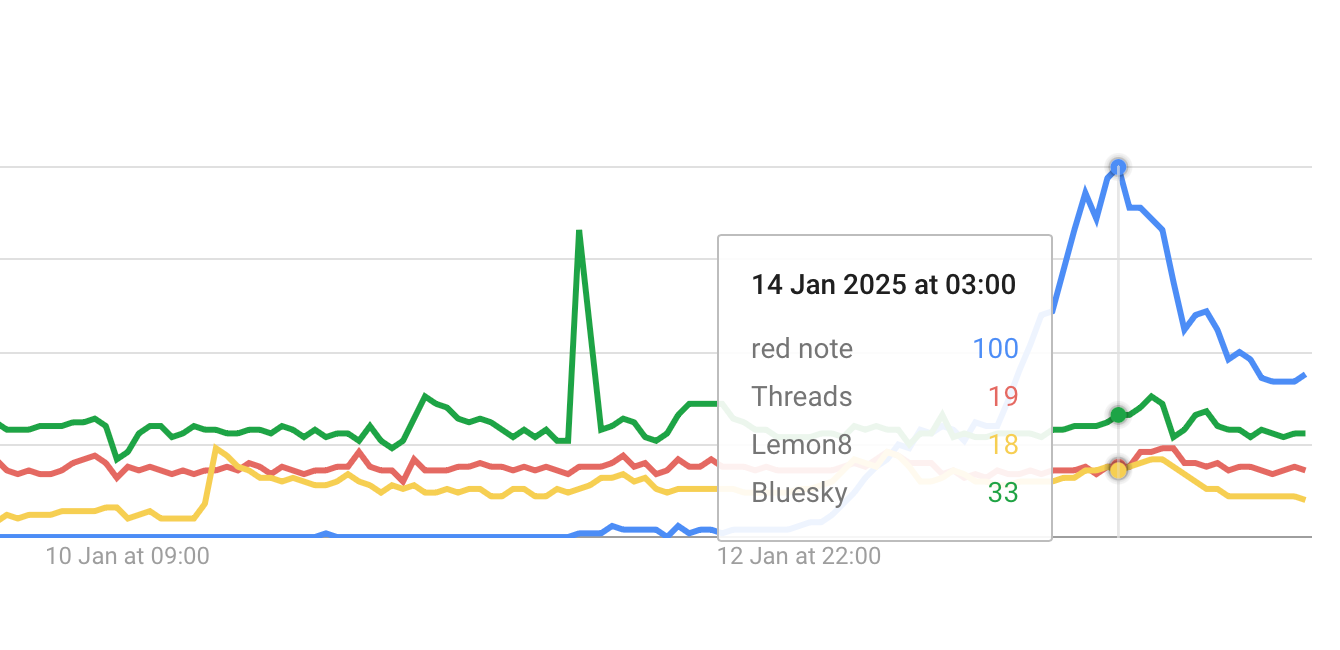
Yulia Gilbert from Florida opened a new Xiaohongshu account on Monday fearing the TikTok ban, which would take effect on Jan. 19. She heard about the app from other TikTok users and migrated there instead of Instagram and YouTube as a “slap against the TikTok ban,” which many believe is against free speech.
“It would hit the American government hard if TikTok refugees like me move to another Chinese social media platform,” she told Following the Yuan. “It would be a big joke.”
The U.S. government argues that TikTok, owned by the Chinese company ByteDance, poses a national security risk, demanding the app’s sale to a U.S. enterprise. ByteDance has called plans to ban TikTok unconstitutional, violating the First Amendment rights of millions of U.S. users.
While TikTok users worry about being locked out of their accounts, they are receiving a warm welcome on Xiaohongshu. For many users, it has become a window to learn about China.
Yan Jun, founder of Shanghai-based Peak Tide Marketing, noticed many accounts with foreign names appearing on Xiaohongshu since Monday. He said that travel guides and those teaching Mandarin were quick to respond with welcome messages, indicating their recognition of potential business opportunities.
“There should be tens of thousands of Americans flocking into Xiaohongshu from TikTok, and people were sharing each other’s Xiaohongshu account on X and other social platforms for friends to follow,” Yan told Following the Yuan.
Since ByteDance launched TikTok — it is banned in China and has a sister app Douyin for the mainland — in the international market in 2017, it has attracted a large number of young users globally. The U.S. alone has about 170 million active monthly TikTok users.
With its soaring popularity that has catapulted content creators and digital influencers to viral fame through short videos, TikTok has been experimenting to transform the app into a revenue-generating platform. In September 2023, TikTok launched an e-commerce feature, including livestream shopping.
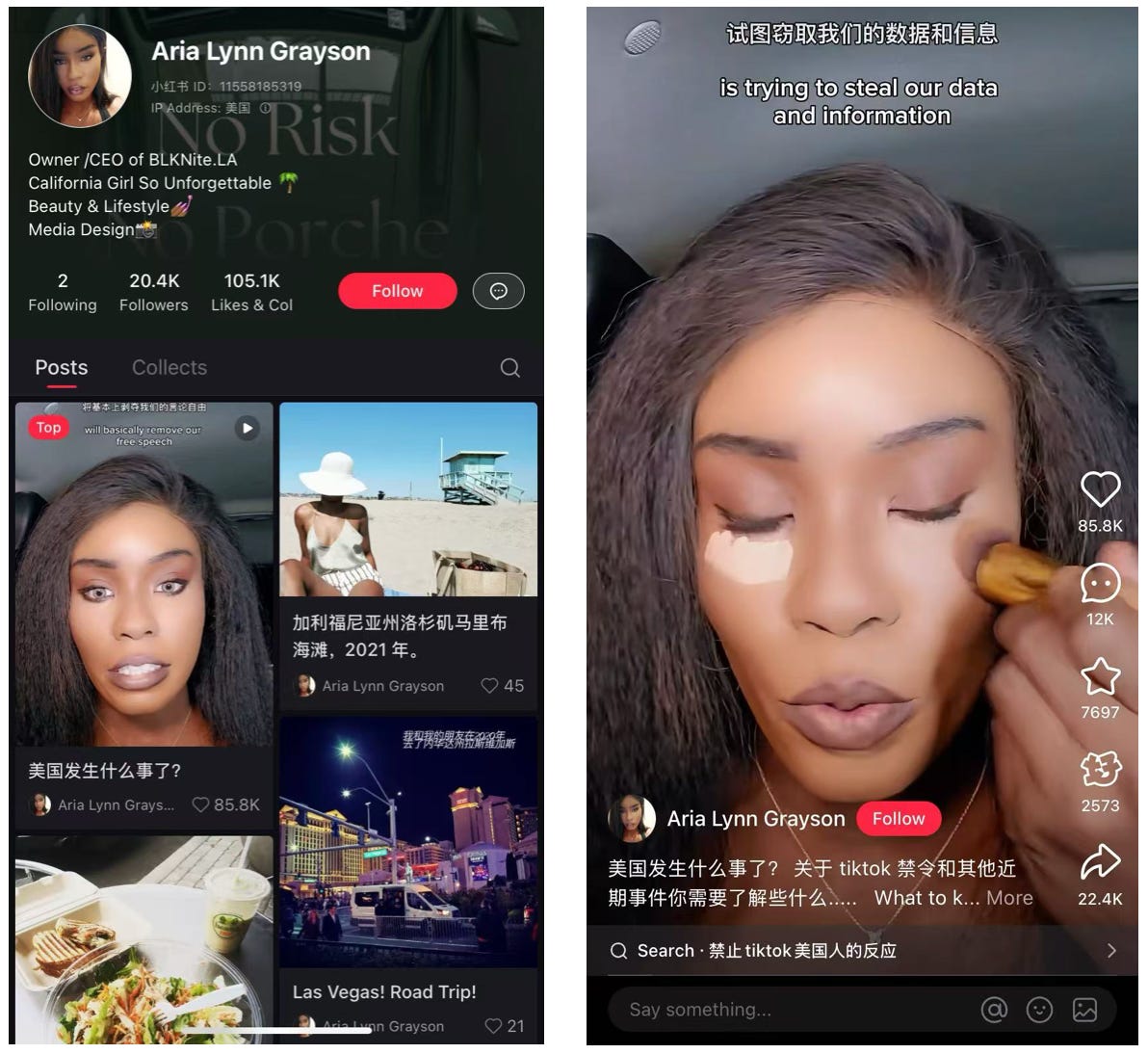
Aria Grayson, a beauty influencer who migrated to Xiaohongshu, said livestreaming and other business activities on TikTok have been a major source of revenue for many content creators and brands. In one of her first Xiaohongshu posts, she said TikTok was the “best platform to make money.” She amassed over 20,000 followers and 100,000 likes in less than two days.
Analysts say that the looming TikTok ban may affect the businesses of creators and sellers in the U.S. relying on the app.
“The crackdown on TikTok in the U.S. would be disastrous, for both brands and influencers, as many influencers are using TikTok as a full-time job,” Liying Chi, founder of Shenzhen-based Tikular, which helps groom TikTok influencers, told Following the Yuan. “For some brands, revenue from TikTok contributes to one-third of their entire sales.”
A survey of 1,000 consumers by marketing firm Influencer Marketing Factory found that 43% of the respondents purchased on social platforms in 2023, including TikTok. Social shopping in the U.S. is projected to grow from $67 billion in 2023 to $101 billion in 2025, according to market research company Emarketer.
Olivia Plotnick, a digital strategist from Shanghai-based marketing agency Wai Social, sees the migration as a business opportunity for both Chinese and international creators, as well as Xiaohongshu. She added that the early adopters could act as ambassadors, sharing their positive experiences to attract more users and help Xiaohongshu accelerate its globalization efforts, broaden market reach, and strengthen its business influence.
“It can expand advertising revenue, boost e-commerce activity, and elevate the platform’s global reputation,” Plotnick told Following the Yuan. “The influx enriches user data, enabling better insights into international consumer behavior and supporting algorithmic and operational improvements.” She added that the content creators and influencers could also foster potential collaborations with international brands for marketing campaigns and events.
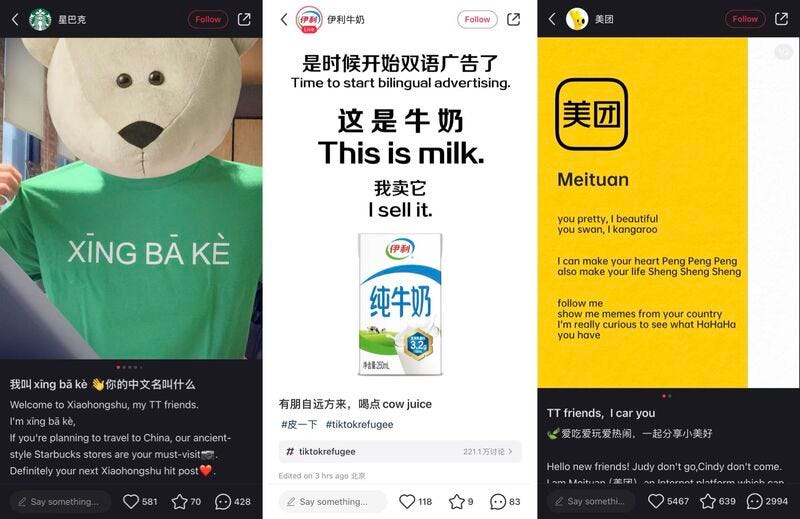
While commercial partnerships may be too early, the camaraderie between American and Chinese users is visible on Xiaohongshu, particularly amid frosty relations and growing distrust between the two governments.
Steve Que, an American-Chinese student, said he is “moved by the union of Sino-American social media users.” The 18-year-old is helping TikTok users learn about Xiaohongshu, addressing their questions about the platform and the etiquette of Chinese social media sites.
“It’s the second time I have felt the world as a single entity after Facebook, and for the first time I’ve felt such an international atmosphere on Chinese social media,” he said. “China needs to be open, and people should come together against hate and prejudice.”
Yan from Peak Tide Marketing also shared a similar sentiment. However, he is cautious about Xiaohongshu’s ability to navigate the censorship that usually follows such popularity.
So far, the Chinese authorities have been relatively lenient on Xiaohongshu, compared to Weibo and Douyin where government censors and in-house content moderators act swiftly to remove any content deemed politically sensitive. And while Xiaohongshu has been slower to respond to such posts, growing international users could likely result in greater scrutiny.
“There would be pressure of censorship and compliance from the Chinese government in terms of content control,” Yan said. “They might be scrambling to find solutions right now.”
Xiaohongshu did not respond to Following the Yuan’s e-mail seeking comments.
Analysts believe that the coming days could be a crucial test for Xiaohongshu as new users navigate a platform that contrasts with TikTok’s short-video approach. The platform could additionally face several issues, including tackling harmful content and user retention.
Bluesky, which saw 20 million users in November following the rise of right-wing rhetoric after Donald Trump’s presidential victory, has reportedly seen slower growth in December. The site’s monthly growth in the U.S. last month stood at 10%, down from 189% in November.
“Long-term retention depends on overcoming challenges like language barriers, differing content preferences, and platform adaptation,” Plotnick said. “Moreover, potential policy risks in the U.S. could impact retention.” 🔚
Editor: Bibek Bhandari
Why is Xiaohongshu (Little Red Book📕) the best platform for web3 mass adoption in China? | Following the yuan

This is one of the ad-hoc commentaries in addition to the weekly news roundup that I publish on Tuesdays. If you’re also new to web3 OR think it’s a scam, I’ve added some relevant readings at the end that depicts this nascent and murky space.
[2/2] 10 forecasts for China’s consumer market in 2025, consumers & information dissemination edition | Following the Yuan

This is a continuation of 10 forecasts for China’s consumer market in 2025, macro environment edition.

We know this is going to last like a week right? Chinese gov not gonna allow it ultimately