

My original intention for the post was to gauge reactions to Trump’s victory from different Chinese social platforms, like I did with the ‘spy balloon’ reaction post, but the more I see, the more frustrated I am about China’s information ecosystem.
When you read China-related in English, it’s usually filtered through something like an air purifier. We, as the deliverers, most often would filter out the misinformation and the conspiracies because we think they’re pollutants and not worthy of your time. A lot of the time, that purifier comes with a political consciousness, too, which is what I’ve been trying to avoid.
But that’s just silly, isn’t it? Because, who really is apolitical? In part 1, I showed frustration about Trump’s victory, and this time, I want to show you why I feel defeated with China’s information ecosystem through the lens of the US election in two major aspects, with examples from Weibo, AKA China’s biggest news channel.
1. Poor fact-checking and verification
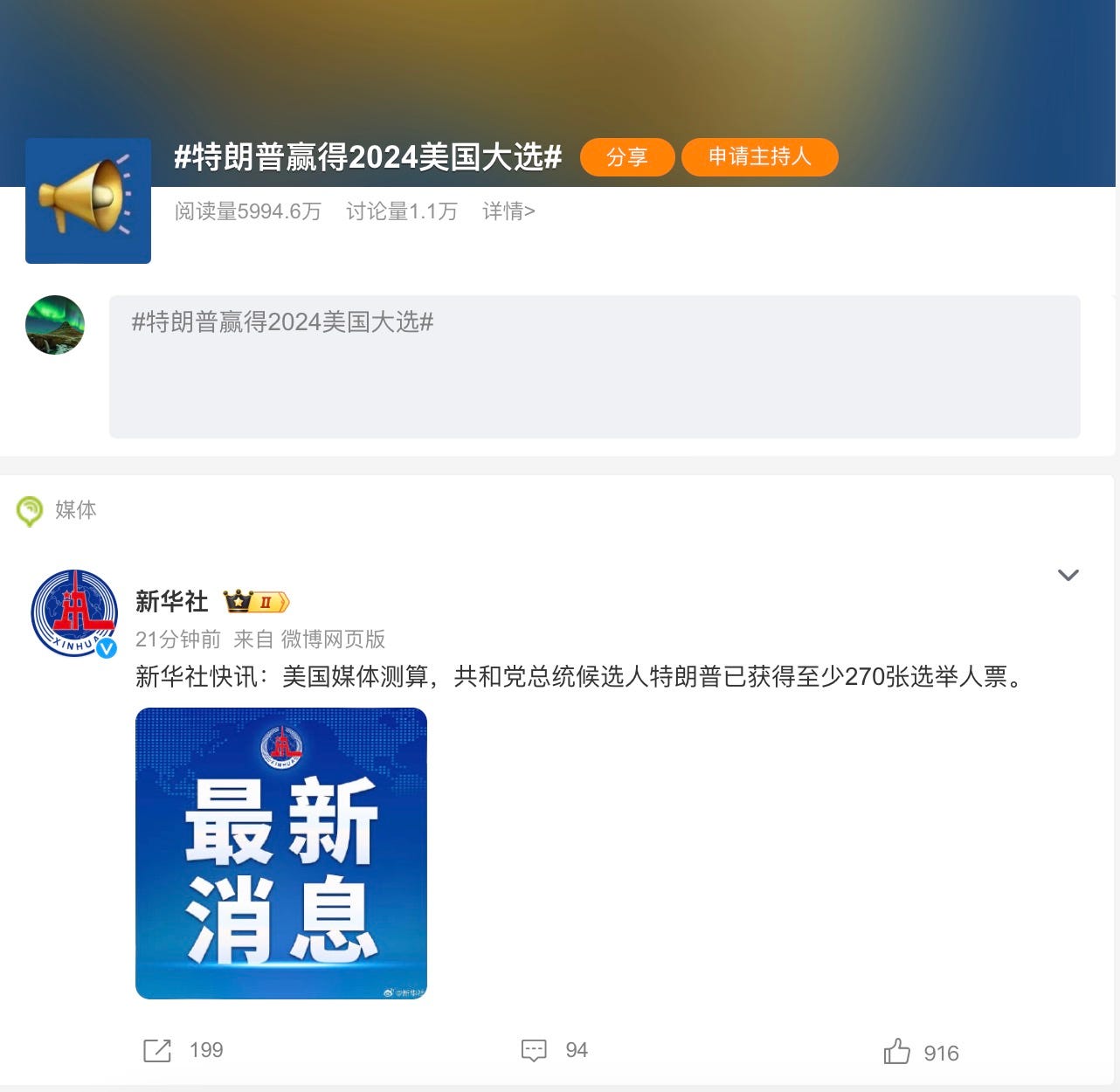
At least a couple of hours before Trump reached 270 votes, I saw a hashtag on Weibo “Trump won 2024 US election”. And it instantaneously got trending. How is Chinese media calling a Trump victory before US media? I thought.
I clicked, and saw that state-owned wire agency Xinhua quoted “a U.S. publication’s calculation” (测算, whereas Huanqiu used the word “estimates 预测”), saying that Trump at least won 270 electoral votes.
Which publication? We don’t know; we also don’t know whether it was credible.
I thought I was going mad. I’m not frustrated whether people perceive them to be the same thing, but how can a national platform (Weibo) equate forecasts with past tense?
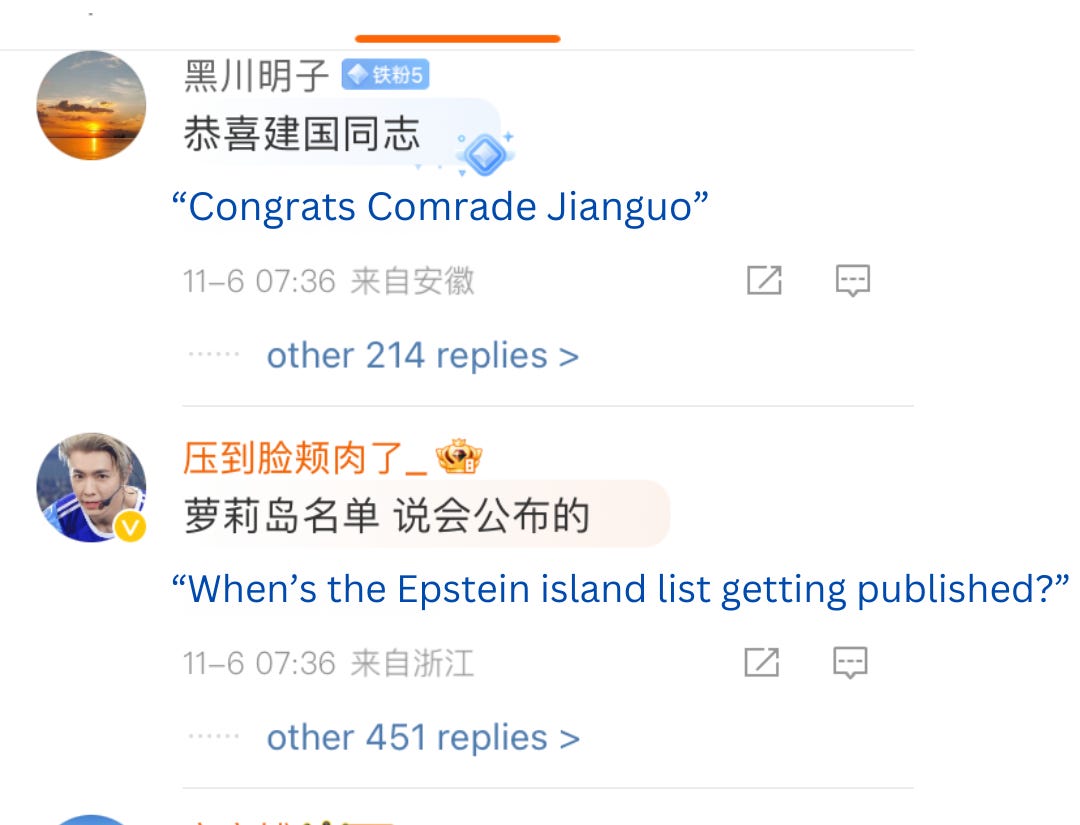
Many users refer to him as Jianguo 建国. Many believe that the worse he made US, the better China would be, which makes him a comrade who contributes to China’s rise. This has been going on since his first win in 2016. (Jianguo, or “build country”. is a common name for patriotic parents for their sons after modern China was founded in 1949; cctv.com reported in 2019 that nearly one million people in China are called Jianguo, and around 1/3 of them were born between 1949 and 1959.)
2. The Chinese filter, and rampant conspiracy
One other focal point on Weibo’s trending list on Wednesday and Thursday was “Loli Island list”, what China refers to sex offender Jeffery Epstein’s Caribbean island which was active from 1998 to his death in 2019.
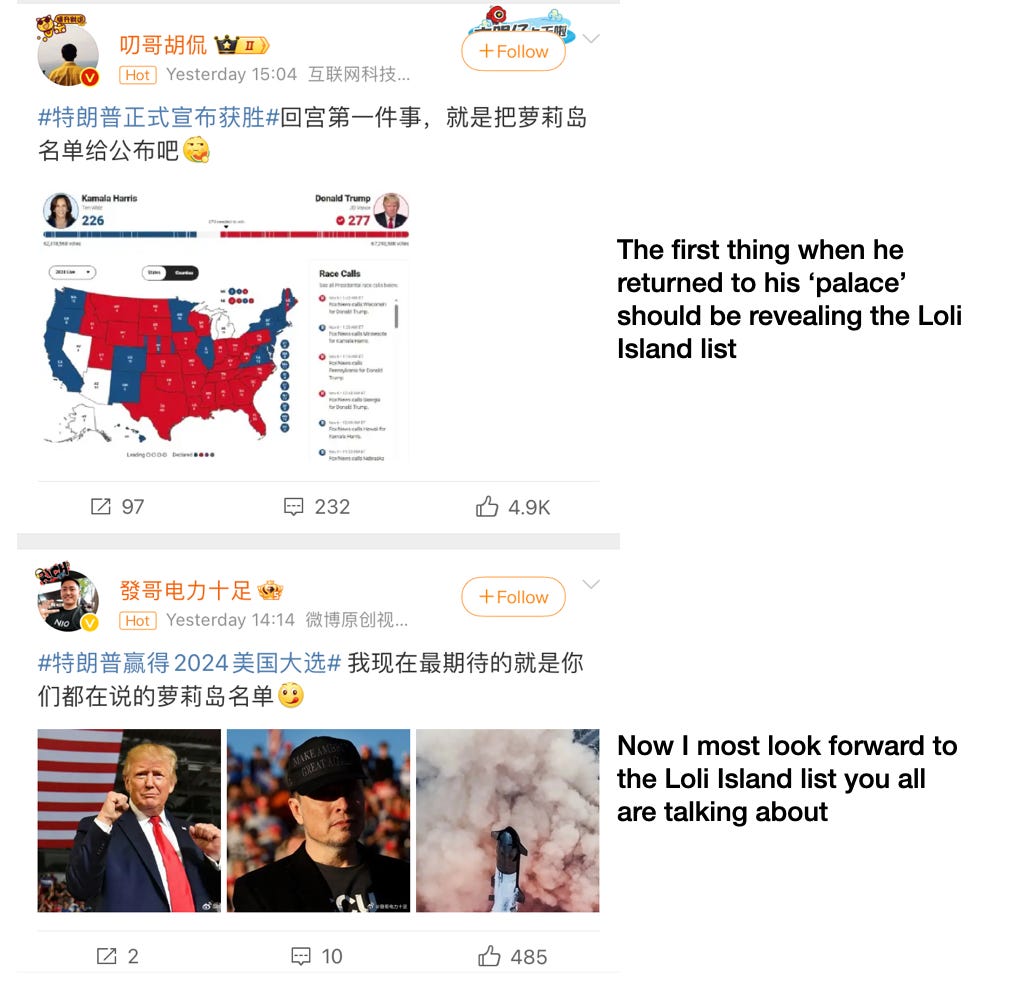
It’s interesting to see how an indirect response from Trump (saying “I'd have no problem with it” when asked by podcaster Lex Fridman in a September interview) is remembered by, easily, millions of people in a different country.
While the “Epstein island” is given the nickname of “pedophile island”, there’s a romantic filter in the Chinese language of the convicted crime of sex trafficking of underage girls, evoking connection with the 1955 novel Lolita and how Japanese anime fans refer to young-looking girls. (Anecdotally, ‘Loli island’ has become a reference in selling stem cell transplant services in China.)
Trump’s victory sparked more engagement than most other political public events, bringing in not just the political and military bloggers, but a wide range of influencers from all walks of life as commenting on US politics is traffic-driving and relatively safe.
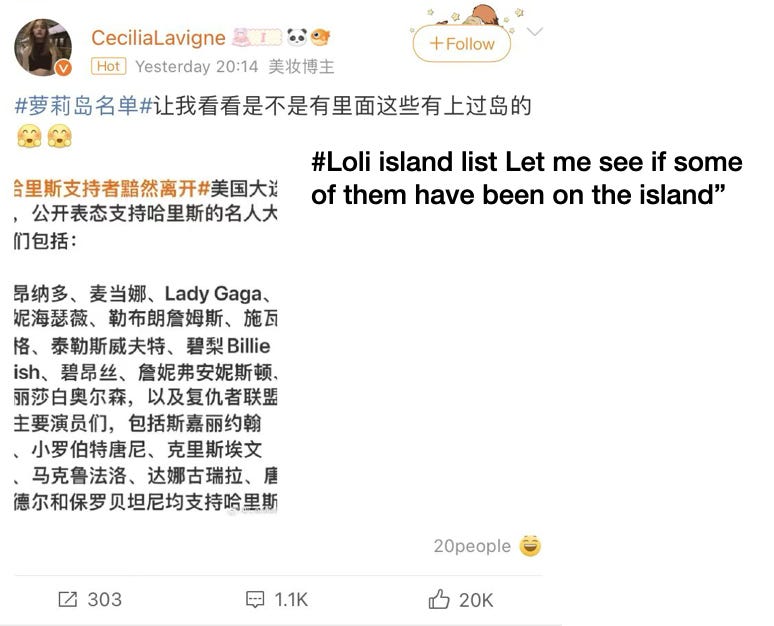
One popular, now deleted post by a beauty blogger with close to 160k followers, featured a screenshot of another hashtag “Harris supporters leave after the defeat” with names like Lady Gaga, Taylor Swift and Billie Eilish. She commented: “#Loliislandlist Let me see if some of them have been on the island”.
The logic here is that they are anti-Trump, and Trump must have something on them. This conspiracy isn’t widespread, but the thinking is.
Earlier this year, a mainstream conspiracy about the Illuminati controlling global celebrities, including Black Pink’s Lisa, was so rampant, spread so widely that luxury brand Celine pulled her posts from Chinese social media. Later, when Zhang Zetian, JD.com’s founder’s wife, was accused of having ties to the Illuminati because of a necklace she wore, the company felt the need to issue a formal statement to refute the claims.
BONUS: What are some users saying on Bilibili and Xiaohongshu
As with every public event, we can assess different platforms’ demographics, and how much they care about this type of international news.
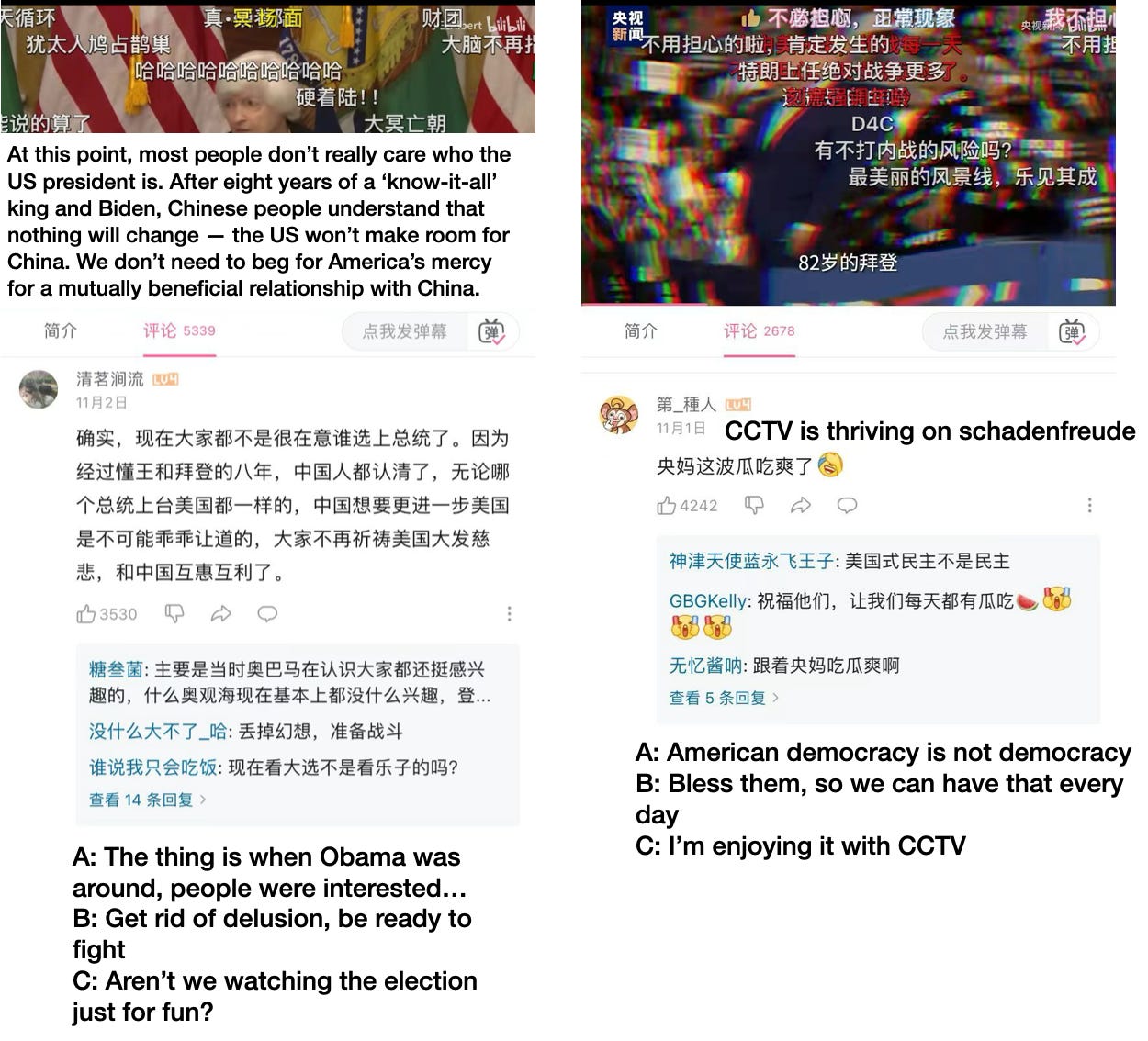
Through the lens of the US election, it’s obvious that how people react to the news is also related to the nature of the platform. On Bilibili, a long-form video streaming site similar to YouTube, users are more willing to discuss the topic in depth, particularly under explainer videos or through real-time bullet comments.
On lifestyle platform Xiaohongshu, some users and copying & pasting jokes like how much hardship Trump had endured before the victory:
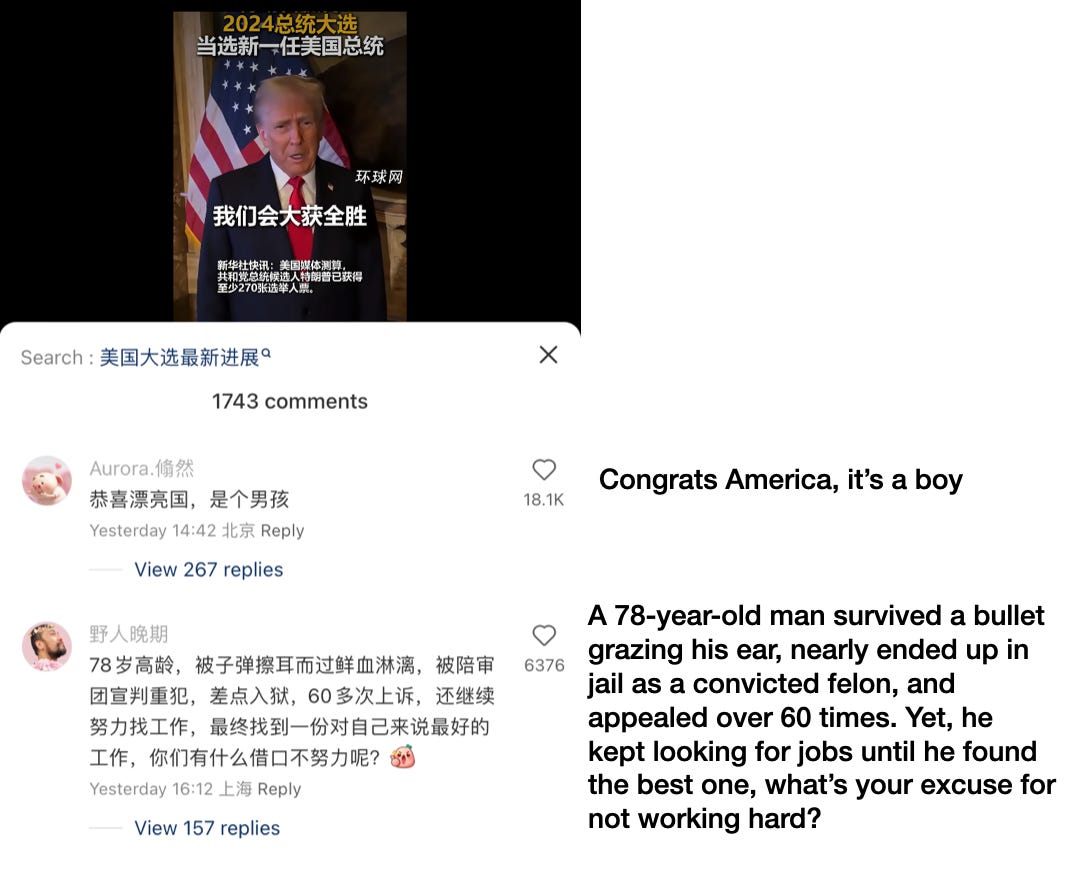
Whether it’s claiming that China is ready to fight or half-jokingly saying Trump is a role model, my read is that Chinese internet users don’t think the US election having much impact on their lives. In “A Global Community of Shared Future”, per Xi Jinping, the US is not really part of it. 🔚
Miranda Jarrett contributed research.