

My name is Yaling, a native Chinese researcher and strategist who moved to London two years ago.
My work is very much focused on China — I do financial and business research, as well as trend analysis of the Chinese market. Additionally, I run a nonprofit called People's Square that organizes and amplifies China events in the UK with a co-founder and volunteers. So, the topic of soft power is hugely relevant to me, not just in terms of work but also in my personal life.
The topic of China’s soft power can be as big as international relations and as small as social media hashtags. Let’s start with the small ones.
Most recently, being Chinese started trending, so we’re seeing terms like Chinamaxxing, “you met me at a very Chinese time of my life,” “day 1 of becoming a Chinese baddie,” online. Collectively, they represent a milestone suggesting China has entered Western pop culture and mainstream public discourse.
How did it get there?
I probably don’t have to explain in this forum, as we may all have discussed and even bought Labubus last year. We all know that Blackpink’s Lisa was the activating agent for Labubu’s global virality. In order to break multiple layers of echo chambers, we needed a global superstar like Lisa.

In a similar vein, I believe that America, or the perceived downfall of America, is China’s activating agent for its rising soft power. Why?
China has been doing cultural diplomacy since the year of its founding. However, the state-sponsored initiatives from gifting pandas to setting up language programs have only served a small audience. These initiatives have faced scrutiny and even hostility as political activities and ideologies clash. After COVID, Beijing invited some Western influencers and media from the Global South to China on paid trips.
None of this was able to prompt China into the western public discourse until 2025, when Trump came into the office last January and #tiktokrefugees flooded into Rednote as a result of the impending TikTok ban.
The flow from the US to China was unprecedented, and it marked a trend that started in the US and was later rolled out to the rest of the world. (Rednote first topped the US Apple Store before reaching No.1 in 80 other markets.)
Moving onto the role of the state — I believe that the best thing the state can do is ride on the wave of incoming attention and convert sudden visibility to sustained goodwill, and not do anything contradictory that undermines the mission.
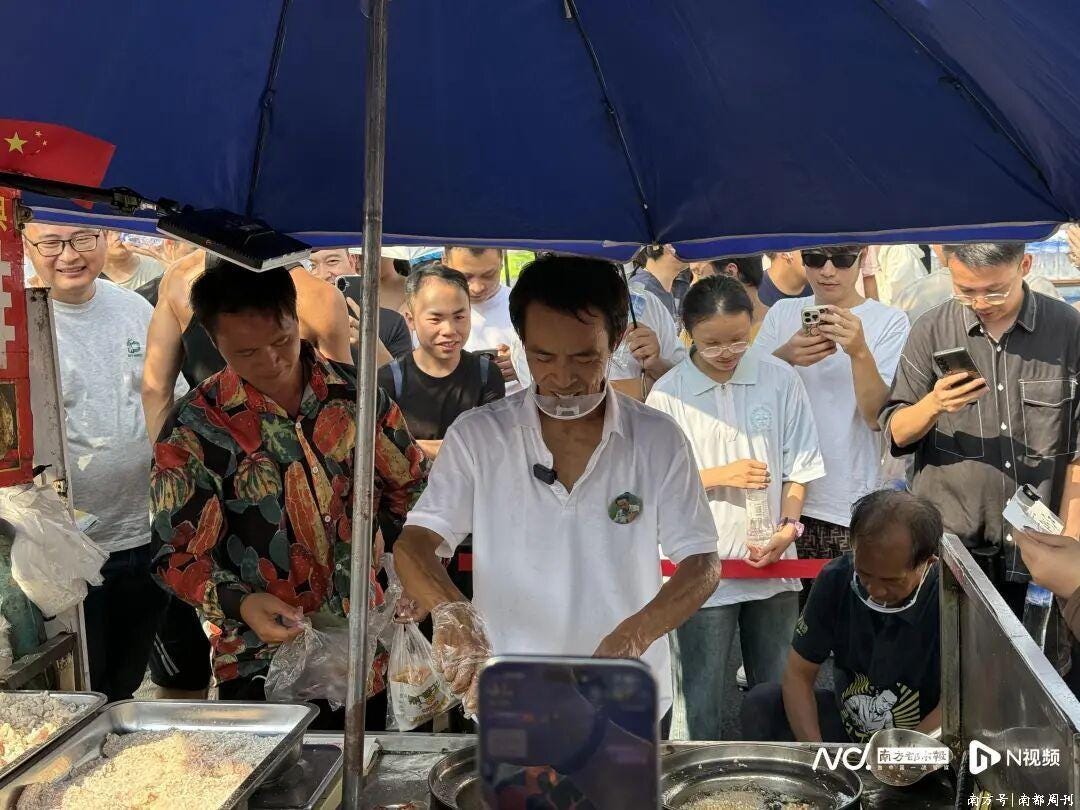
A more accurate phrase would be 接好流量 (directly translated as “properly receive the traffic”), which is often used in suggestions to local governments amid domestic tourism trends like Zibo BBQ, Tianshui Malatang and the chicken cutlet brother in Jingdezhen.
When it comes to contradictions, what do those look like?
Anything that defies what the country says its values should be 富强民主文明和谐 (prosperity, democracy, civility and harmony). This includes arresting investigative journalist Liu Hu for his article on corruption in Sichuan province. It also includes silencing the whistleblowers and victims of civil disputes, like the dog owner in Jiangsu whose Samoyed got burned alive by two kids, with no consequences imposed on them.
At the same time, we should not only shed light on the positive aspects of soft power before slipping into a territory of brainstorming better propaganda strategies for China.
There are also Chinese cultural exports that include models, products and ideologies that first took off in China that do not exactly cast a positive light on the country:
996 work culture, which many believe has been eradicated since it attracted media scrutiny. But it hasn’t. Apart from maintaining its prevalence in China, it has also made its way to Silicon Valley this year.
Pig butchering scams — here I don’t mean that China invented scams, but we do seem to have the best know-how, with guidebooks of pig butchering romance and investment scams leaked on the internet. The victims are not only Chinese citizens but people around the world, moreover, they have seriously stigmatized countries in SEA, with many scam rings run by Chinese people.
Pinhole cameras, or spy cams that enable everyday voyeurism. What’s pertaining to the UK is that last year, two Chinese international students Zou Zhenhao and Xu Chao were arrested for being serial rapists, both of their cases involved these cameras that are easily accessible on Telegram groups via Chinese sellers.

Overwork, scams and cameras as a criminal tool did not originate in China, but China’s manufacturing prowess and operational know-how, built with the foundation of the mass population, proliferated these phenomena.
They are the opposite side of the same coin.
The viral meme will come and go, and Chineseness can be fleeting and transient, but what can make it last is that when the spotlight is on us, whether the Chinese government shows the world what it stands for.
The US became the world’s spiritual beacon because its values shaped the global consciousness, and China will have to do the same before the spotlight moves on. 🔚