

Hi everyone, in this piece, I’d like to share my reflections on the reader survey that some of you completed three months ago, and more broadly, on my trial and error for Following the Yuan over the last five years.
Here are three key findings from the survey, if you are in a hurry:
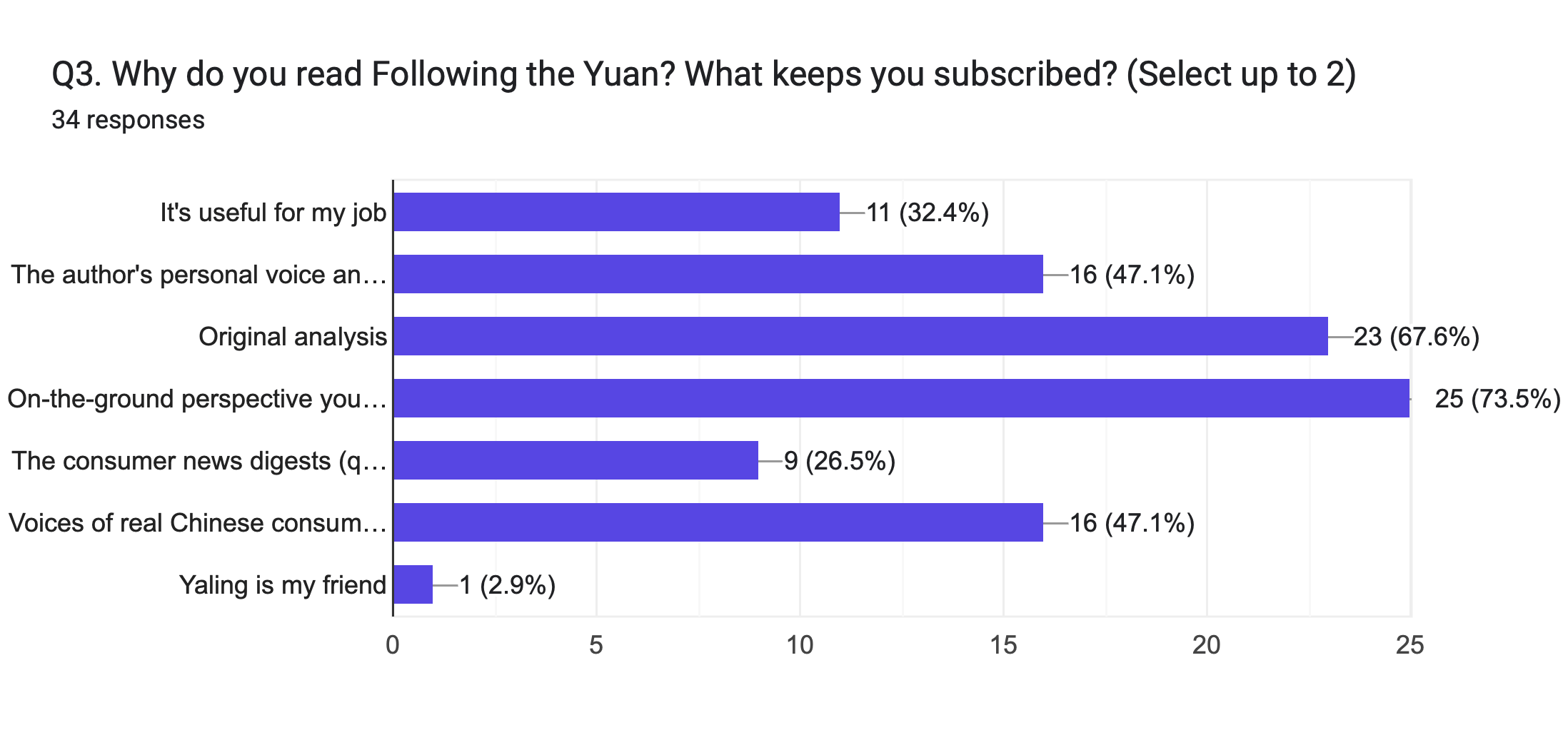
Originality and on-the-ground reporting are widely appreciated.
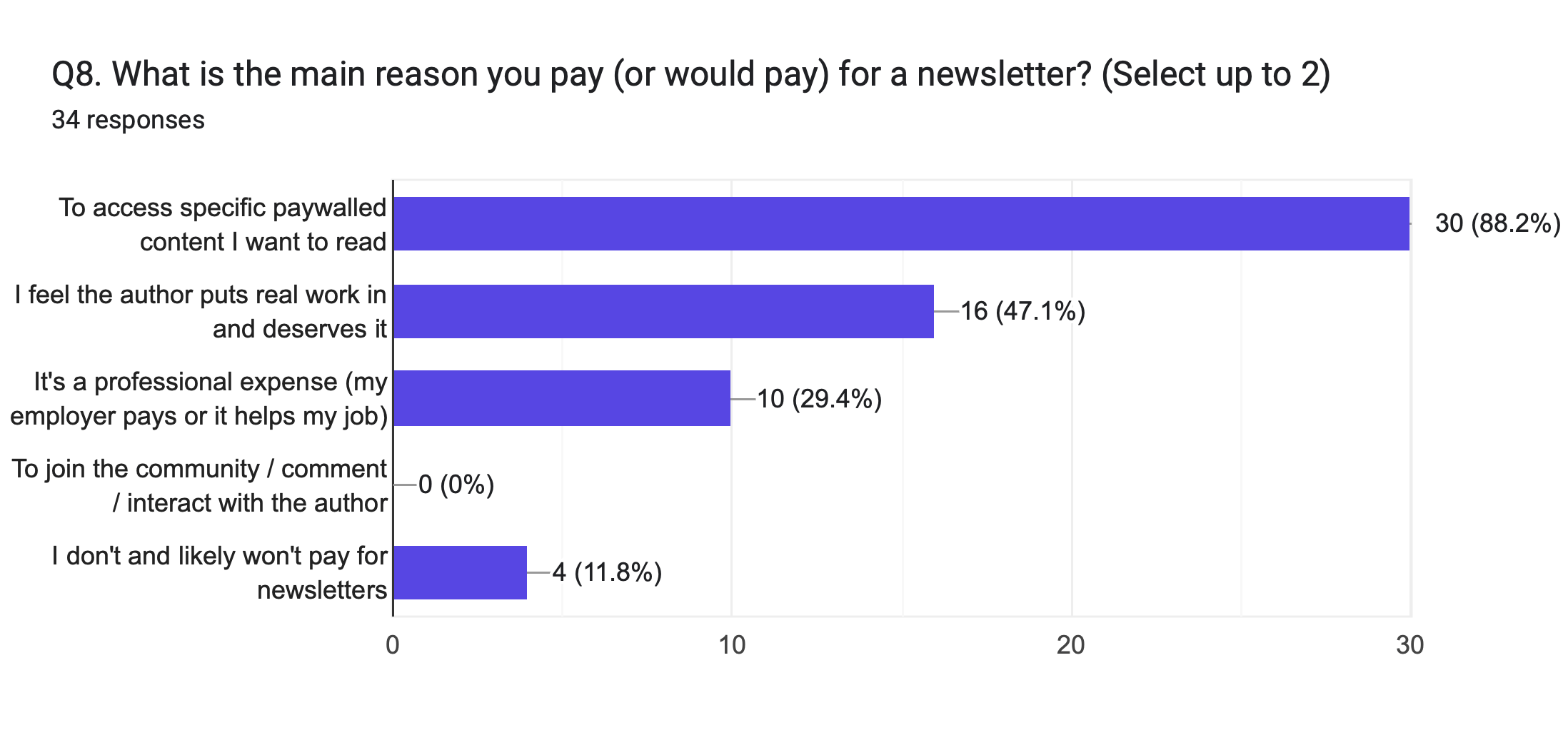
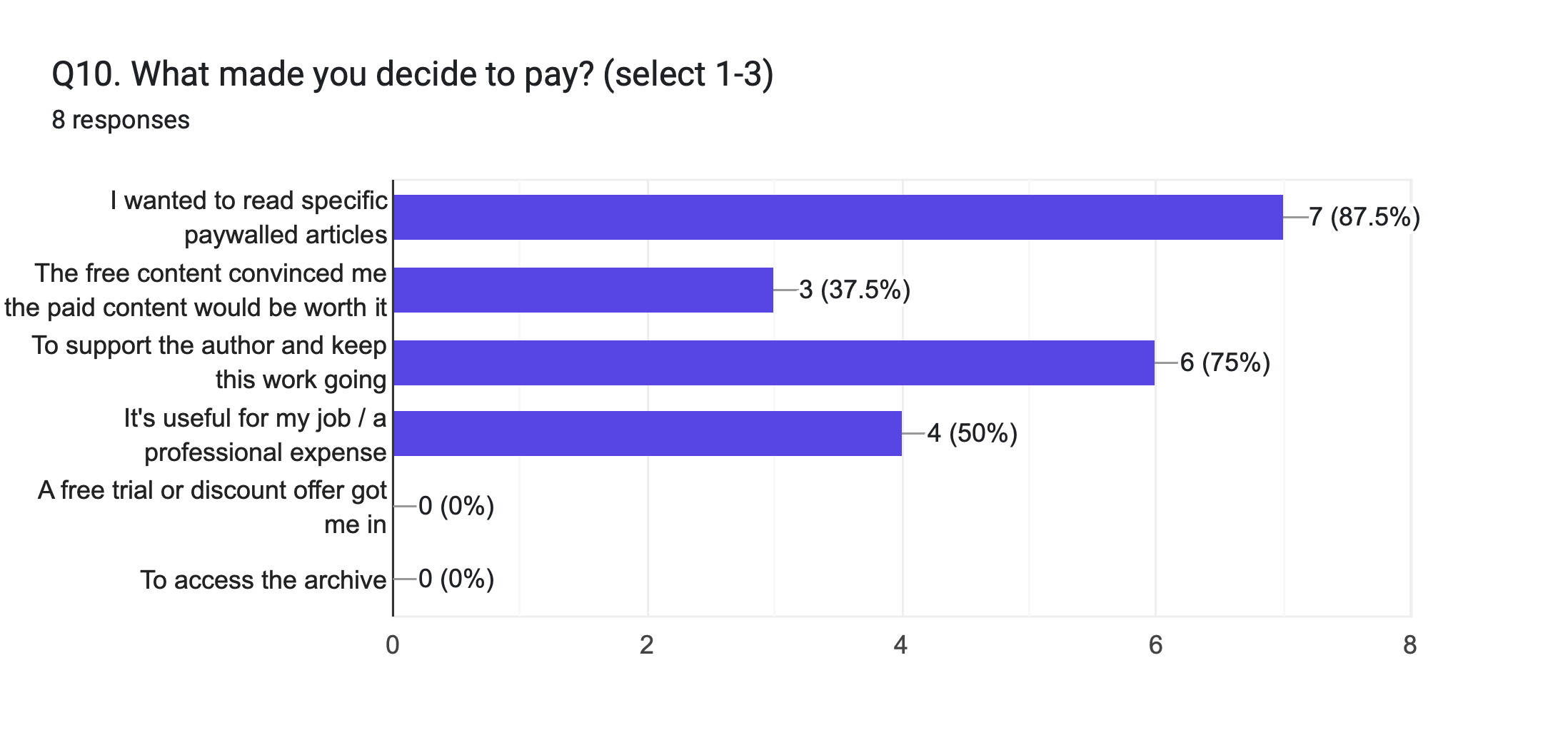
Respondents who pay for my newsletter do so to access paywalled content (87.5%) and to support my personal endeavors (75%).
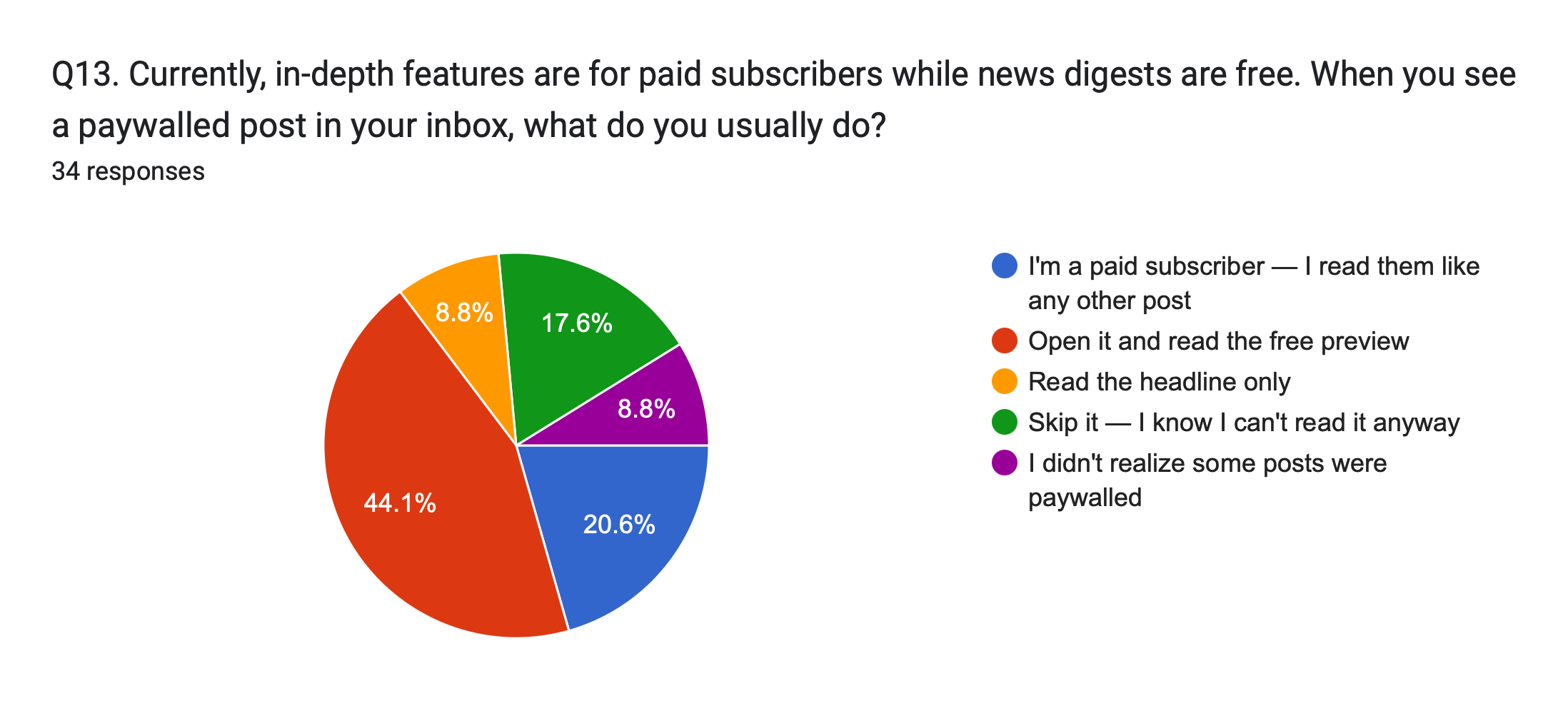
About 40% of the respondents say that they either find the free preview enough or do not know what value this provides.
And my takeaways (note to self):
Target audience isn’t necessarily your actual audience.
Your intention with a product doesn’t always match how users position it and how they use it.
Some people just don’t pay for content, and that’s okay.
This post covers how it all started, my trial and error, the external factors that matter, as well as the detailed results from the 2026 reader survey.
How I started it
For the relative newcomers: I first started posting on Substack at the end of 2021, but didn’t feel I could properly post after while working in full-time journalism, as my then-supervisor didn’t like me posting outside of work.
As an opinionated individual, I had been active on then-Twitter for a couple of years, and Substack felt like a natural transition.
What started it was my frustration that the consumer sector was neglected by English-language media. At that time, I also failed to get a job on this beat.
In 2023, I did CUNY’s Entrepreneurial Journalism Creators Program, which was introduced to me by Far & Near and The Southern Chinatown’s Beimeng Fu. In the program led by Jeremy Caplan, a successful Substacker himself, one of the first exercises we did was user interview, and I decided to target the finance and business sector after chatting to some of you. (Below is my reflection after finishing the program.)

Trial and error
I’ve put time into some experiments over the last few years, and ended up either not following through or not getting the results I wanted.
And I thought it’s worth noting my aspirations versus reality across the following five domains: 1. short videos; 2. podcasts; 3. perks; 4. contributors; 5. paywall —
Short videos
From late 2023 to mid-2025, I was fixated on the idea of starting a media business, and thought I should definitely do short videos.
That was before GenAI became omnipresent in content production. And I got help from the multi-talented marketer Valerie Mok throughout that time. I would write the scripts, and she would review them and edit the videos. Here’s one of them:
Reality: I don’t think it suits me. I struggled with squeezing nuance into a video under 1 minute — ok, I sucked at it. I’m familiar with the grit theory, and I believe production time would drop as AI becomes more prevalent and helpful. However, short video traffic is nice to have, but also not a must-have if I wanted to convert that to in-depth research projects.
Podcasts
In 2024 and 2025, I explored the idea of doing a podcast. As a media watcher, I definitely see the importance of this format for knowledge management, attracting a larger audience, and landing paid work. I actually don’t read many Substack posts, and mostly listen to Chinese and English podcasts, so it makes sense to me as a user as well.
After some initial exploration, I did a few lightly edited episodes here and there, and I have asked around to see if any friend wants to be my co-host (like Zak of YCG and Carwyn of SOAS). I wanted to do something like Pivot, which sounds like friends chatting but covers a broad base of tech, politics, and general news.
Reality: I haven’t given up on the idea. Judging from experience, I’m very into planning, strategy work, pre-production, and production. My weakness is content operations and post-production. I definitely need a producer to kick my ass and hopefully handle editing and marketing.
Perks
One of the perks Valerie and I spent a lot of time on was the earnings call calendar. I have a few dozen companies that I used to track while reporting on China business, and I assumed the audience, whether institutional or retail investors, might find it useful.
Now it’s something we can design and deploy much more easily with AI, but previously, it just took a lot of manpower, and I didn’t even know if it was actually useful. I am reminded of that when I see in the survey results that only one-third of the respondents find it useful for their jobs, which also implied that my newsletter was nice to have than a must-have.
Contributors
I’ve always wanted to support writers, and in line with my then aspiration of becoming a fully fledged media company, I also want to have a platform for Chinese freelancers and writers like me, and cover wide enough China topics.
Some early commissioned topics included duty-free retail in Hainan and Heytea’s origin story in Jiangmen. I mostly do one-off projects and give them a rate that matches Sixth Tone (1 RMB per word for essays, and 1.5 RMB per word for features), which is an OK rate in China. I pay editors a hourly or day rate.
Reality: This is a hard lesson, because I’ve actually been paying out of my own pocket. At first I was shocked by how low the traffic and conversion rate was. Then I realised that on a larger scale, I don’t have a wide enough reach to justify the spending. Take Hainan duty-free retail as an example, it could be important for retail brands but not important for people with general business interests in China.
On top of that, readers might already be paying for the likes of WSJ and the Financial Times, which I could never compete with. I also noticed that traffic-wise, Substack values personal opinions more than these features and reporting.
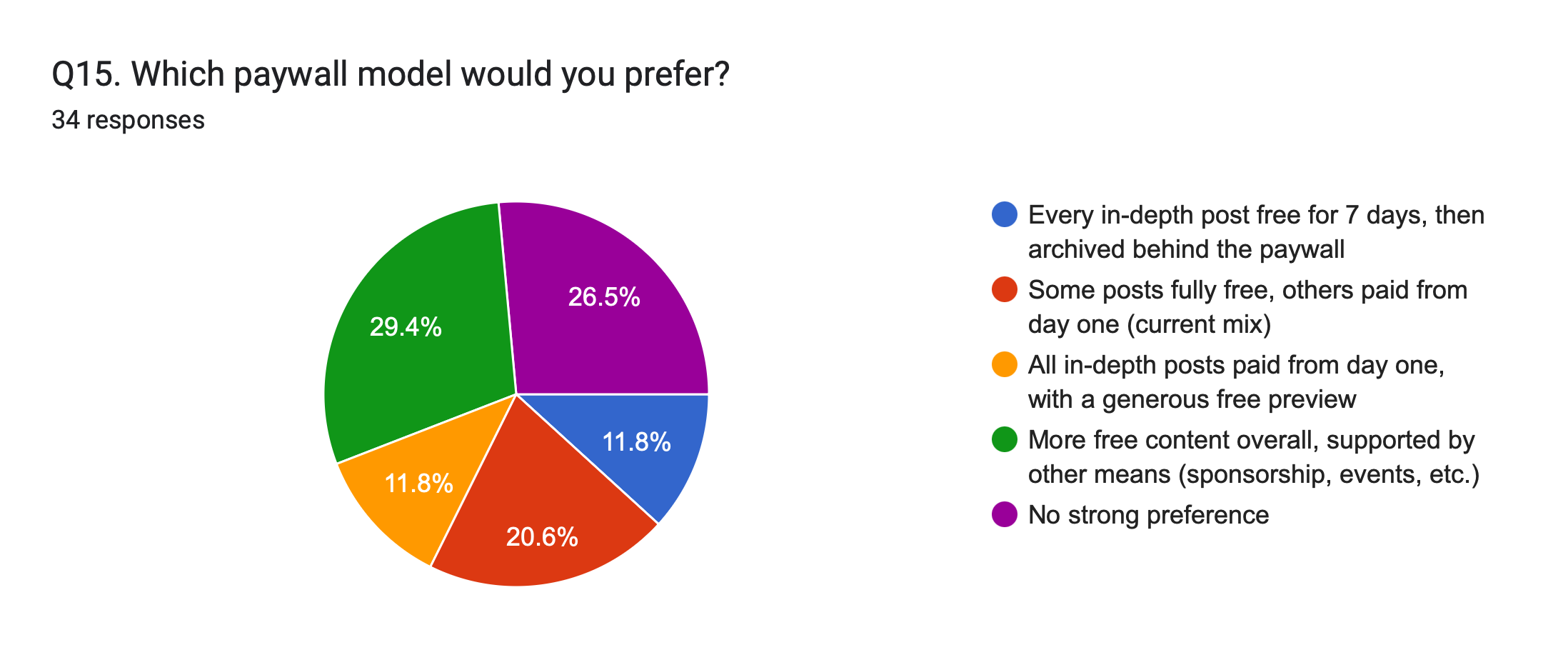
Paywall
I turned on the paywall around 2023, so far, I made about $10,000.
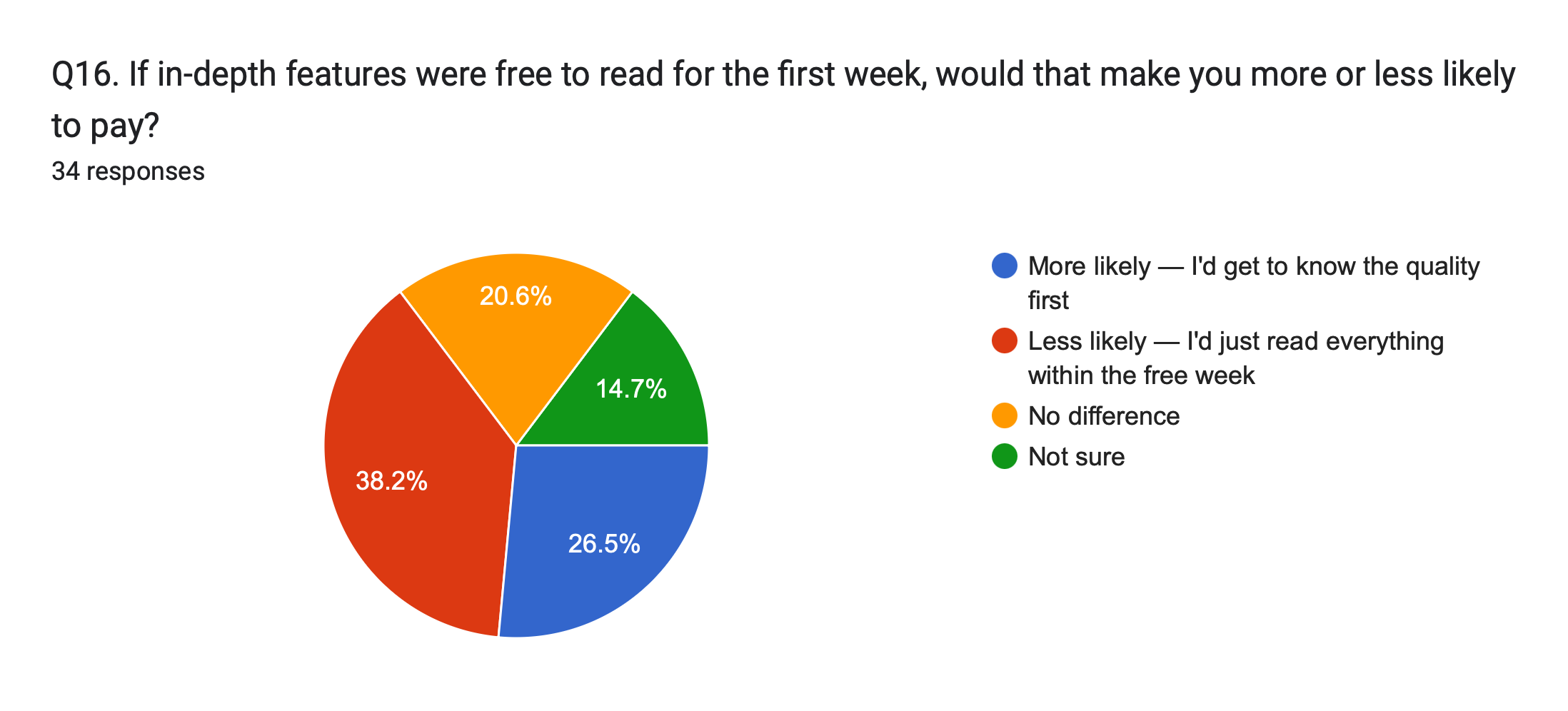
After a chat to Robert from Baiguan, who suggested me to have most new stuff for free and have them back up after a few days, I started doing that.
There were some back and forth too, like sometimes when I want my opinion pieces to reach a wider audience, I will keep it open. And for personal essays by contributors I also keep them open.
Reality: It can be confusing to subscribers what’s paywalled and what’s not. After the Subscriber user boom and the spread of AI tools, I’ve also started to think it makes more sense to keep archive open but the most recent content behind a paywall.
Intention-action-capacity gap
Increasingly, the gap between my intention and action brings me back to reality.
I once strived to be as big as a media company, which is why I went into doing some of the things below from short videos to podcasts to commissioning features. All seem to be a bit of a stretch with my capacity.
I don’t have investment and don’t intend to spend much time on financing. I can at most afford to hire one or two freelancers at a time, and paying contributors, which far exceeded the all-time subscription revenue I received, not even including my own time.
2026 reader survey results
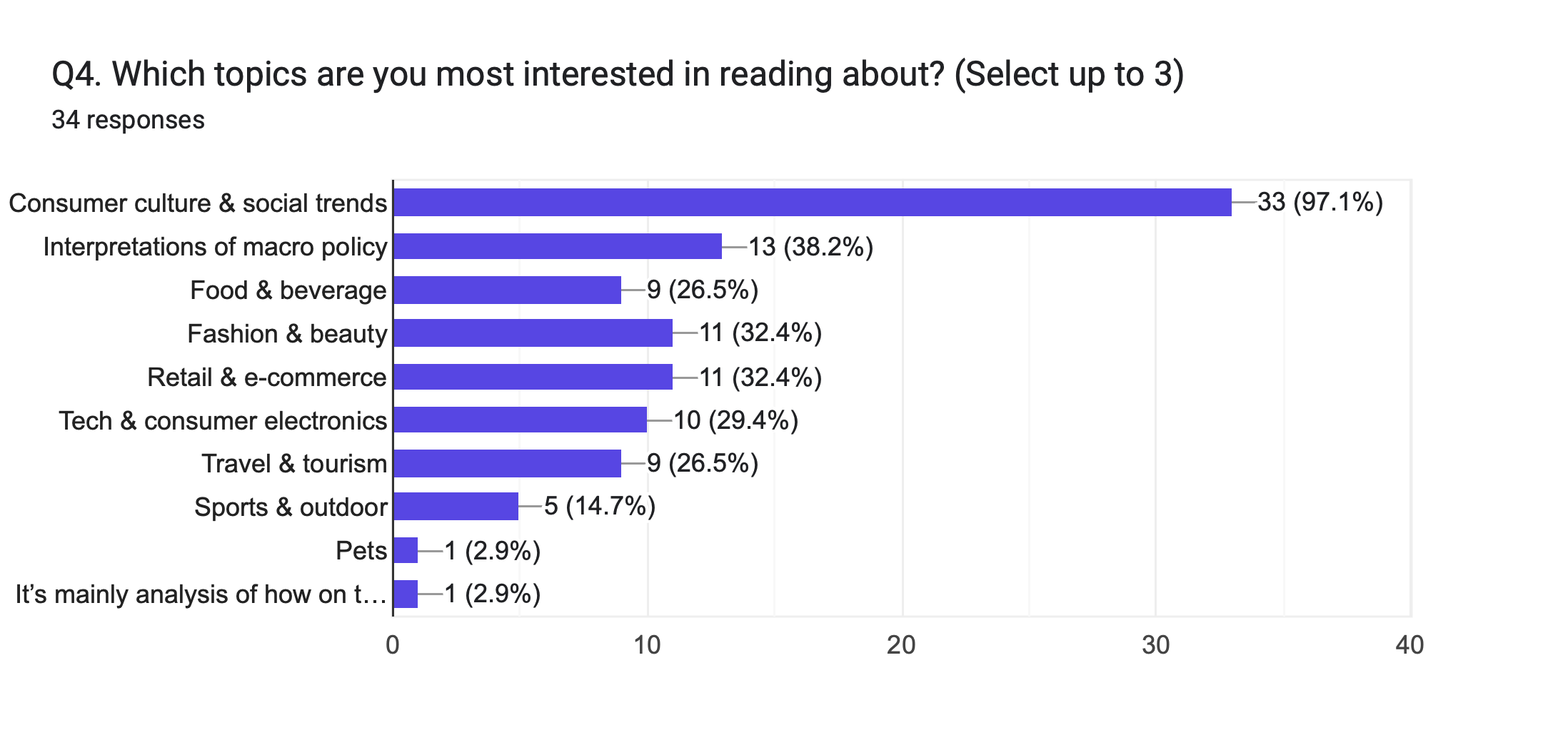
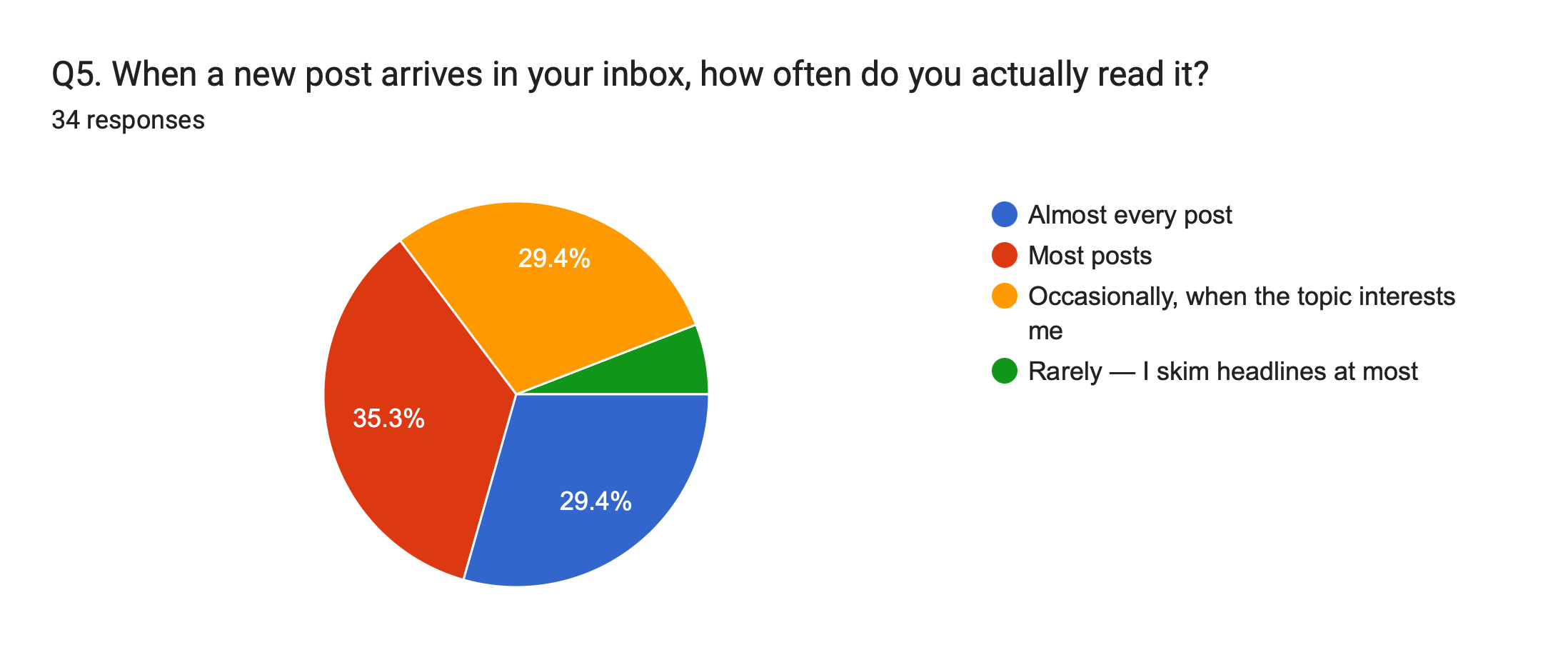
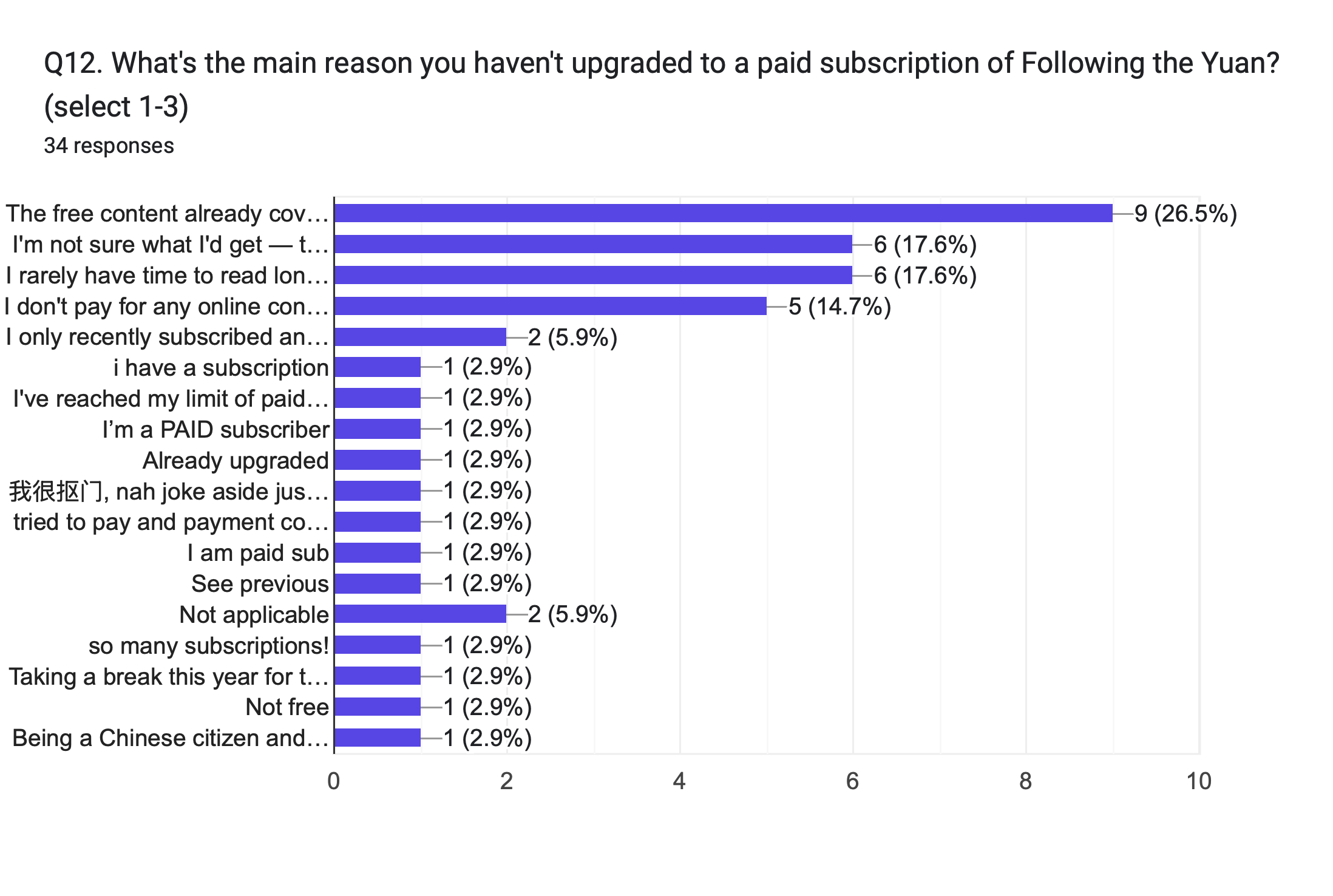
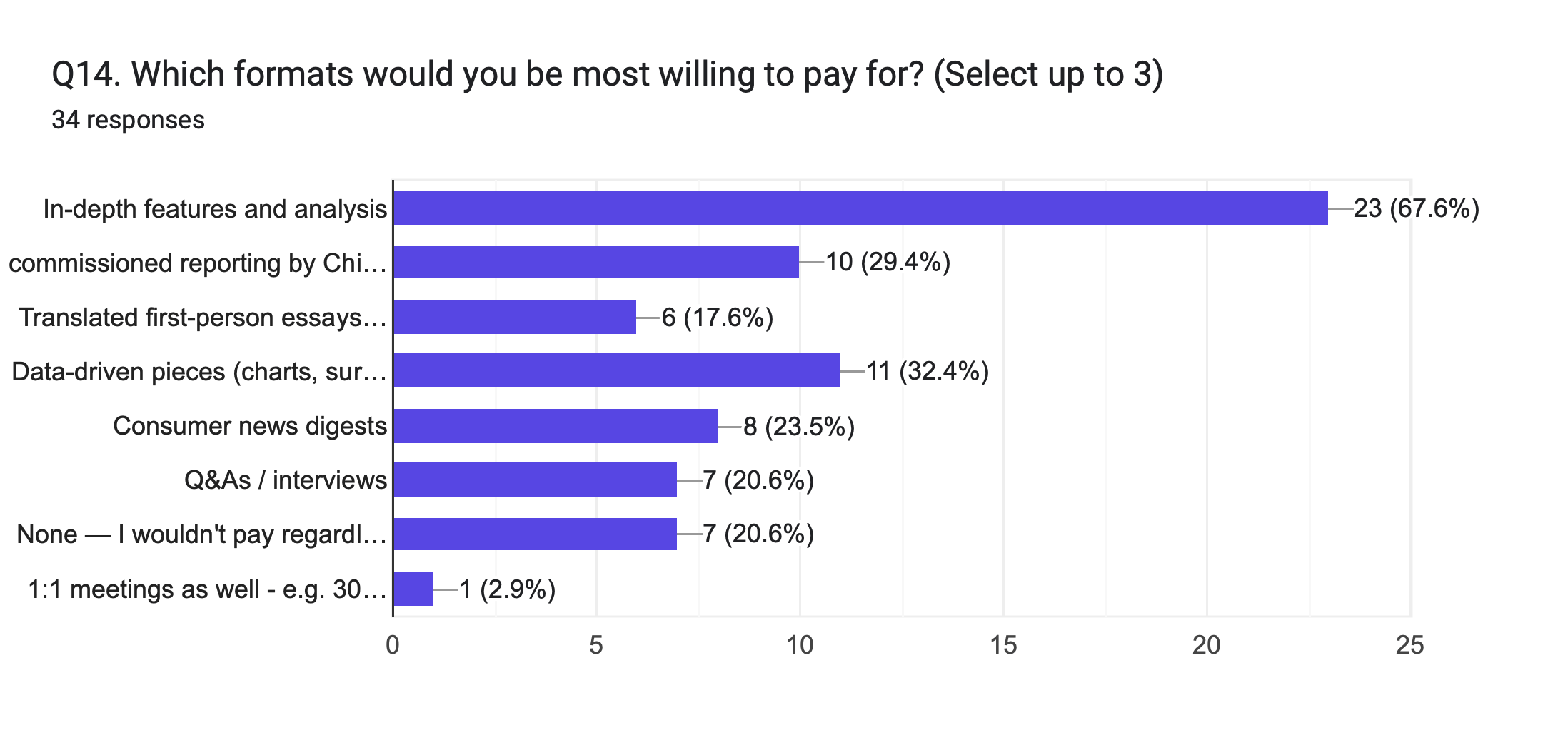
Here are the survey results, which are based on responses from 34 subscribers (~70% of them free, 30% paid), almost half of them have been reading FTY for two years.
External context: Substack, China, the newsletter format
A lot of Substackers have noticed a large fall in subscription revenue since last year. That is partially a result of the platform becoming mainstream, which has caused a certain level of newsletter/email fatigue for those who have been here for a while.
Abundant choices lead to increased competition, which actually parallels to patterns in China’s consumer market.
I’ve come to understand that the consumer sector in an emerging market isn’t the most exciting subject for investors now. We’ve long passed the paradigm shift era, namely, the boom years just before COVID when US funds poured hot money into this sector. Even in my research work, there are now plenty of high-tech and manufacturing-focused research gigs, not a lot of consumer-oriented work.
That hasn’t shifted my passion for consumers, so this newsletter has given me another means to stay relevant. After seeing some people pivot, including Taylor Lorenz, from text-first to video-first or podcast-first, I’m pondering the same for myself.
So, yes, five years in, Following the Yuan has not become Morning Brew. I’m still not self-sufficient.
More recently, I have also noticed that across both my research and newsletter work, I can end up micromanaging a lot. This keeps me from doing high-value work.
Knowing what I tend to end up doing, I will try not to announce big goals (and not follow through). One thing I can say for now is that Following the Yuan is here to stay, as I explore ways to delegate and produce more in-depth and longer content.
I’ve met amazing people through Substack, and love to thank each and every one of you, no matter whatever I have to do next.
With special thanks to:
Ranjan Roy for the early discussions about the value of newsletters
Beimeng Fu for introducing me to CUNY’s program
Splice Beta’s Alan and Rishad for giving me a platform to share my learnings
Baiguan’s team, including Amber Zhang and Robert Wu, for being my sounding board and supporting various collaborations
Valerie Mok and Rongrong Zhuge for bringing my (sometimes half-baked) vision to life
Bill Bishop for the unwavering support of the China Substack community, financially, and otherwise
Fellow Susbtackers and subscribers Ivy Yang, Grace Shao, afra wang, James Wang, Sam, Louise Matsakis, Chris Danton, Day1Global生而全球 by Ruby & Star | 做全球化时代的超级个体, Wanqing Chen, etc.
So flattered and the community of substack is what keeps me going too. But agree with you there needs to be a better commercial value/model 为爱发电can only go so far.