

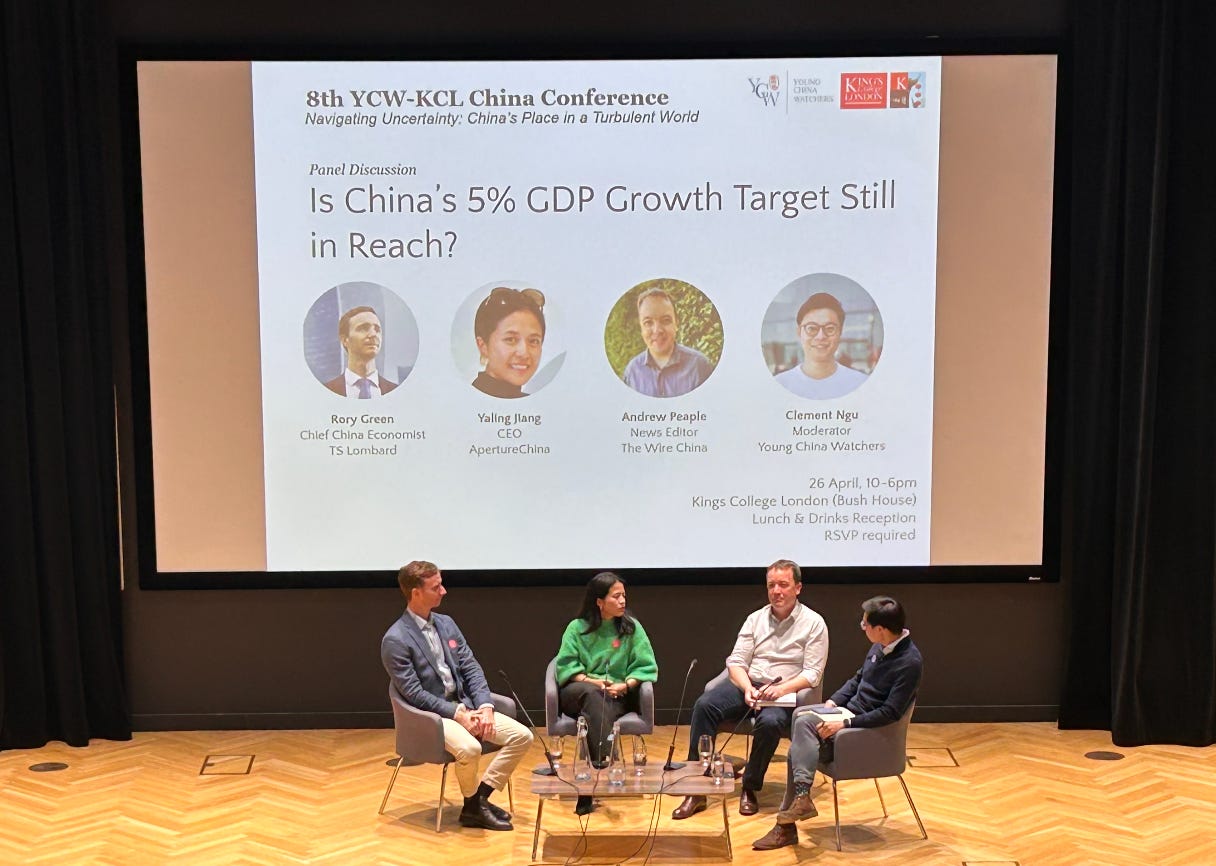
Last weekend, I had a full “China day”—starting out at YCW-KCL’s China conference, speaking about the economy, and in the evening, we hung out with People's Square and went to the UK premiere of Lou Ye’s film about COVID. Huge thanks to YCW for organizing the event! I also want to put it out there that I’d love to speak at more events in Europe this year.
Being at the event reminds me how valuable the consumer perspective is, and how important it is that I continue to represent and amplify their voices, alongside those of native Chinese commentators. (The latter isn’t at odds with supporting China experts more broadly!)
So, why the sports theme this week?
Well, some peers (including Baiguan, Olivia Plotnick, etc.) and I have been talking for years about sports as the growth point post-COVID. On RedNote, “sports and outdoors” are now the third largest category in terms of exposure, after “food and beverage” and “beauty and cosmetics”, with 83 billion views in the last 90 days, according to intelligence platform New Rank. That said, it may be hard to connect the notion with applications and case studies—therefore, I would like to share some recent samples that could help point you in the right direction. I hope you find them useful.
Running — ON Running opens first China flagship in Chengdu 🏃🏻♀️ᯓ
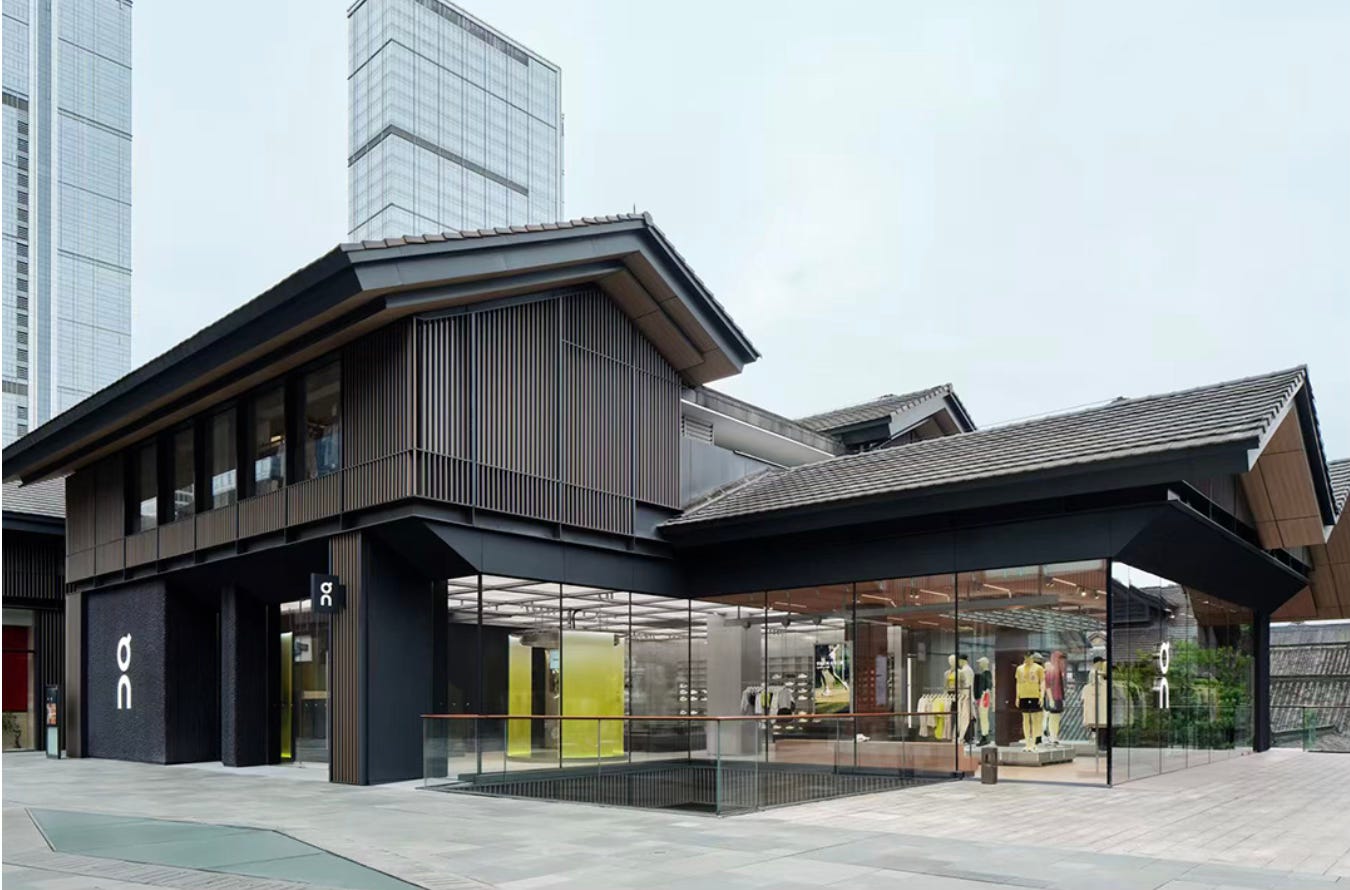
The celebrated Swiss running footwear brand ON (NYSE: ONON) recently opened its first China store in Chengdu. After working with distributors for five years—during which it mapped out its e-commerce and digital presence, experimented with a pop-up in Beijing’s SKP-S and a runners’ space in Shanghai—it finally decided that it’s ready for offline retail.
The store launch was activated by a community run led by ON’s sponsored athlete Ah-Ti (阿提) with local run club Digin Community. Along the way, they visited several youth culture destinations in Chengdu’s city center, including Medisn (a taproom, bar and cultural space), Mondoli (a cafe and cocktail bar), Standard Nerds Club (a pingpong culture brand), and the vinyl shop Mintone, according to the brand’s official WeChat post.


Cai Yijia, General Manager of ON Running Asia-Pacific, told domestic media that "by 2026, the number of On Running stores in the Chinese market is expected to exceed 100." In FY2024, ON Running’s net sales landed at CHF 2,318.3 million (US$2806 million), representing a full year growth rate of 29.4%, as its net income increased by 204.5% to CHF 242.3 million from CHF 79.6 million in FY2023.
The larger picture: While many premium brands are rethinking their offline strategy in China—scaling back in traditional first-tier cities, for example—foreign consumer brands are increasingly opting to launch in China’s new first-tier and emerging markets. Chengdu is one of China’s 15 new first-tier* cities in 2024.
Shanghai, once the default launchpad, is now seen as an expensive option with diminishing ROI. In late March, Decathlon’s cycling brand Van Rysel* opened its first Asia store in Hangzhou (a new first-tier), and Shenzhen, a first-tier and the tech capital with less luxury and fashion cachet, recently welcomed first stores from LVMH’s Fenty Beauty and Spanish footwear brand Camper.
There can be many factors behind these location decisions, from government subsidies and realtor intelligence to proprietary consumer data. But the overall trend is clear: if the emerging markets were a new notion before, now it’s going mainstream.
[New first-tier*: The concept of “new first-tier” was first introduced by Yicai Weekly in 2013. It overlaps significantly with the previous definitions of second-tier cities, which remain as a separate category. The list is based on five indicators: concentration of business resources, city connectivity, population activity, diversity of lifestyle, and future potential. Van Rysel*: I worked with the brand for full transparency.]
Cycling — cycling media Rouleur to enter China 🚴🏻♀️ᯓ
Last Thursday, UK-based Gruppo Media announced a strategic alliance with Titan Media Group (体坛传媒集团), China's biggest sports media group, to bring the cycling brand Rouleur to China. They are also looking to form a joint venture in the future for business collaborations.
Rouleur magazine was first created by cycling brand Rapha and was acquired by Gruppo Media in 2013. Its industry event Rouleur LIVE hosted over 80 brands in London last November.
Matteo Cassina, Chairman of Gruppo Media—a former banker and cycling enthusiast—is optimistic about China’s growing importance in the global cycling market.
“My expectation is that it will become the biggest cycling consumer market in the world within the next 10 years,” he said in a statement. “China is…becoming the best manufacturer of products in our industry, not only due to its efficiency and low cost labour, [but also] innovation, large economies of scale.”
The larger picture: China is both the world’s largest bicycle market and its largest manufacturer. In recent years, cycling has evolved from a simple mode of transport to a lifestyle trend, and from mass-market appeal to a growing focus on performance.
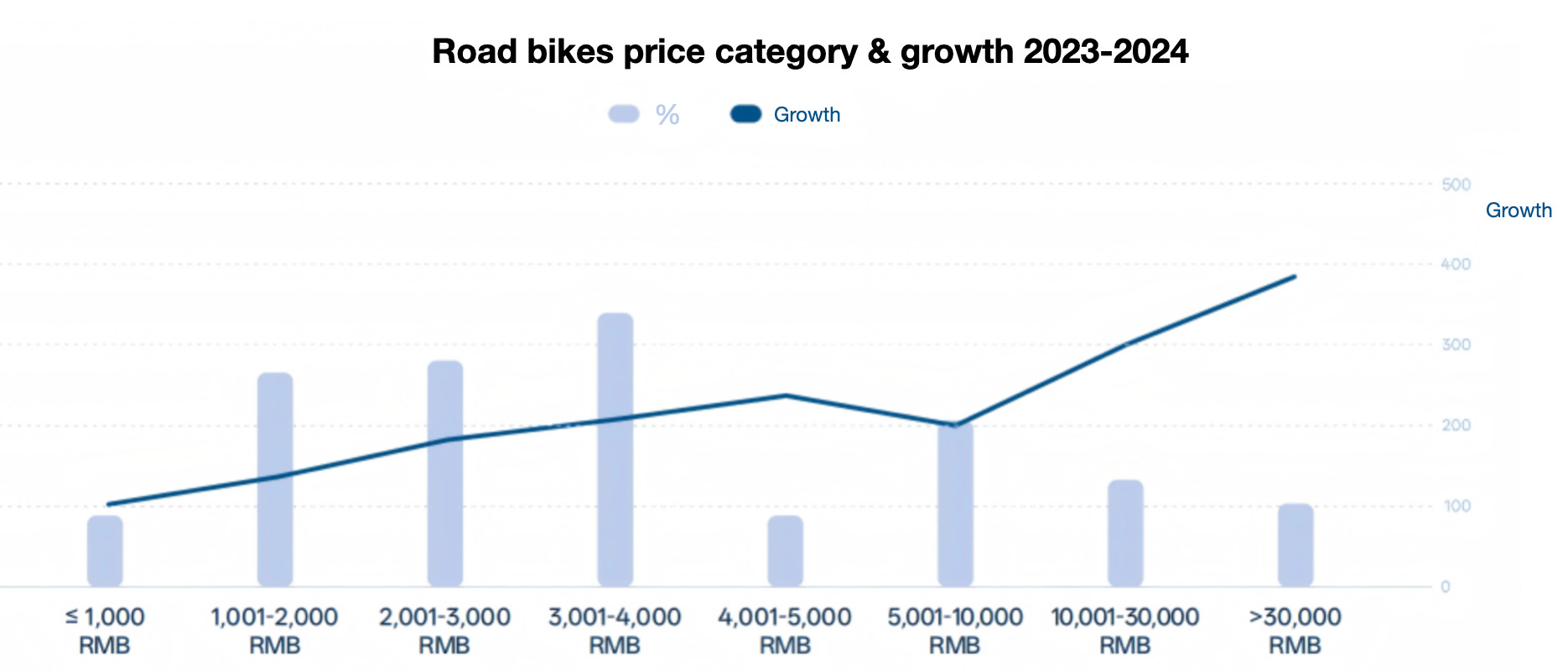
As the road cycling boom has come down from its peak a few years ago, distributor-run cycling shops are feeling the pressure from the boarder economic slowdown. According to Biketo’s 2024 report, this downward trend became particularly evident in the second half of last year. In the meantime, an increasing number of consumers are opting for quality domestic brands.
I think Rouleur is coming to China at the right time. Promoting the cycling culture, instead of just pushing for sales, is a great way to mitigate the larger economic risk; it is also what Chinese cyclists and amateurs demand, as the Greater Firewall shields them not just from the political content but industry-specific know-how. They are hungry for content that can better their performance and deepen their knowledge about cycling history, races, and health & safety.
Sports beauty — Sports beauty line from Joy Group’s Judydoll 🌸ᯓ
Chinese beauty brand Judydoll launched a sports beauty line Judydoll Live, addressing the pain points of makeup wearers in active scenarios, as fitness becomes an increasingly prominent part of national agenda.
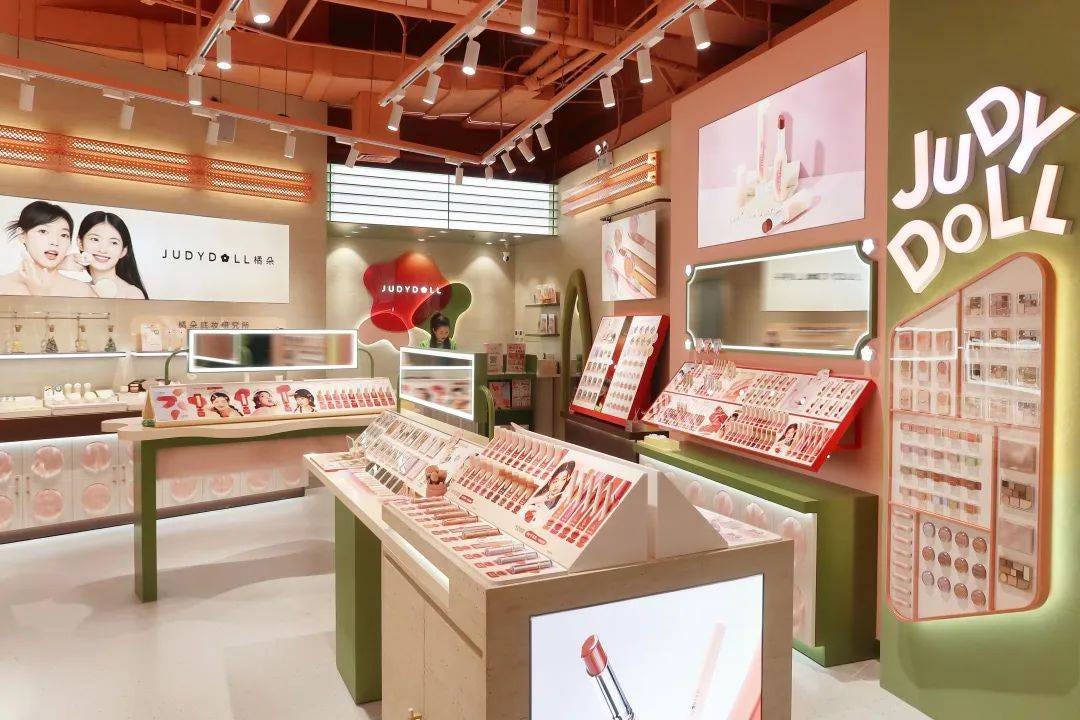
Started off a a direct-to-consumer brand in 2017, Judydoll, owned by Shanghai Joy Group, now has over 80 branded flagship stores across cities in China. Its retail network covers more than 15,000 outlets in over 30 countries.
The product line, launched in mid-April, claims to offer waterproof, sweat-proof, sun-proof, smudge-proof, and heat-resistant products, priced between 40-90 RMB. My only critique? I expect more colors of foundations other than the two that both skew pale.


The larger picture: Beyond the rise of the sports beauty category, what’s equally worth noting is the growing ambition of C-beauty groups. First rose to fame around 2018, the market reception of C-beauty brands have changed 180 degrees in recent years.
With the economic downturn, the rise of the “new Chinese-style” aesthetic, and an abundance of high-quality local products, consumers have repositioned their preferences, which gave C-beauty brands and the companies behind them a strong boost. In the latest earnings season, Proya became the first beauty group in China that exceeded 10 billion RMB in revenue. Others including Chicmax Group (上美股份 in Chinese, owns Kans, One Leaf, Baby Elephant), Yunnan Botanee Bio-Tech (贝泰妮集团 in Chinese, owns Winona, Winona Baby, Aoxmed, etc.), Florasis, have also kept themselves busy either launching new brands in high-growth sectors, or acquiring struggling Western brands for a rebirth in China.
Another insight here lies in aligning product or campaign launches with cultural momentum. When Estée Lauder did its tennis-themed Double Wear foundation campaign in 2020, it was poorly timed as the momentum for tennis barely picked up during COVID. It’s a different story in 2024/2025. Now, thanks to a good timing, Judydoll dominates the sports beauty category searches on RedNote, that is a position many Western products wish they had secured first. 🔚
Great post Yaling, I wasn't familiar with the term new first-tier city before, it's interesting that lifestyle diversity is a factor in categorisation as opposed to just naked economic factors. Also, am I the only person who is impressed when women wear makeup to work out? I know in East Asia especially it's so normal to wear makeup just to leave the house, but I seriously could not be bothered to get dolled up for the gym 😅
It’s super interesting that On Running’s first store is in Chengdu and not Beijing or Shanghai. Living in London we are so used to a first store being in the capital. But Germany is kind of similar - such a brand may start in Munich or Frankfurt or Hamburg and not Berlin.