

[OOO] is an occasional column that provides on-the-ground insights from my visits to trade shows and events in China. This week, I’m featuring Gaming Consultant Daniel Camilo’s recent trip to Shenzhen’s Huaqiangbei.
Almost every city has or once had a well-known electronics market. Before the rise of e-commerce, these markets served as windows for locals to explore cutting-edge technology, obtain the latest models of electronic goods, and as key supply hubs for industry distributors. In Beijing, it was Zhongguancun (中关村); in Shenzhen, Huaqiangbei (华强北); in Chengdu, Xinshiji (新世纪); and in Nanjing, Zhujiang Road (珠江路), etc.

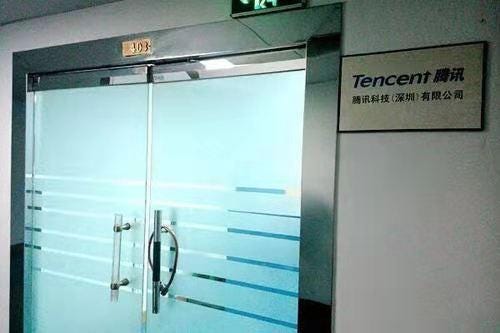
These electronics markets fostered many of China's current tech giants. For instance, JD.com’s Liu Qiangdong had a booth in Zhongguancun in 1998, while Tencent’s Ma Huateng started out at Huaqiangbei’s SEG Plaza.
As these markets fulfilled their historical roles and gradually replaced by online marketplaces, some of the ones in Huaqiangbei started selling fruits, snacks, and beauty products. Making the pivot is tough. Huaqiangbei’s last tech-related hype was crypto mining before Chinese government deemed that illegal in 2021, afterwards, it went further downhill.
“While most business happens online, physical stores still exist, even if they're very rare and mostly redundant,” Camilo wrote. Let’s hear more from him below. You can also subscribe to his newsletter Gaming in China and follow him on X.
I first visited Huaqiangbei in 2009, and have been there countless times since I’ve been living in Shenzhen.

Physical gaming stores are relatively rare in China.
The vast majority operate in the so called "grey market"*, selling a lot of imported games and consoles (meaning, not officially licensed products for commercialization in mainland China), but also more and more national licensed models.
I said relatively rare, because most business happens online. Even physical stores like these ones I visited all have a digital storefront on e-commerce platforms (such as Taobao, and others). Business absolutely depends on it, with 99%+ of transactions happening online and through shipping, nationwide.

Nowadays, very few stores such as these still remain. 10 years ago, Huaqiangbei had a big floor inside a mall exclusively occupied by gaming stores. Dozens of them. Now, only a handful can be found. In other major cities throughout the country, the situation is fairly similar.
Why these few stores still persist if most of the business happens online? Frankly, I'm not sure. Any insight on that would be very welcome.

Most games and consoles found are PlayStation and Nintendo Switch. The Switch is more or less tied with the PS5 in terms of demand and popularity nowadays. Hard to gauge with accuracy since so many of these sales are accounted in other markets, since the stock is mostly imported.
Presumably, the PS5 sold a lot more units in China in recent months due to Black Myth: Wukong’s enormous success. Microsoft's Xbox has a very shy presence, while Valve’s SteamDeck is surprisingly present in every shop I visited.
All the latest games and hardware can easily be found in China, even if they're not officially available. Such as the PS5 Pro, which, according to sellers I've talked to, is selling pretty well, with "a lot of people asking about it". These mostly come from Hong Kong and Japan.
Personally, even though I buy most games through e-commerce platforms (mostly Taobao), I still like to visit "real" places like this, while they still exist. It's nice to browse through physical games...find some unexpected rare old gems and bargains, and just feel the vibes.

*PS: ”Grey Market” is an outdated, and likely inappropriate way of referring to these stores.
Honestly, I’m mostly ignorant concerning the legal and regulatory status of these stores, and I have no conclusive reason to assume they operate in any way outside of the law. “Grey market” has long been used when talking about these kinds of stores however, and I use it loosely here as well more due to its identifiable legacy and heritage, than for its descriptive accuracy. I don’t want to sound unfair or misrepresent the hard-working people who operate these shops. Please understand.


Thank you very much for including my content :D
Loved going to these in Hong Kong whenever we needed something. 2m charging cables a new computer, the new Animal Crossing game, good times!