
Text & design: Rongrong Zhuge
Editor: Yaling Jiang
Editor’s notes: What’s the point of archetypes and stereotypes? I believe they are essential to our understanding of different human conditions and how environments shape individuals. Within China, the difference is that an archetype is a recognized character type, and stereotypes form later in people’s minds when the archetype enters mainstream discourse, get repeated, generalized, and later solidified into collective assumptions.
From the outside, China has still largely been seen as a monolith: people on this vast land think and act in unison under the one Party rule. Inside of China, however, people from different parts of the country take genuine pleasure in learning about and debating these regional archetypes and stereotypes.
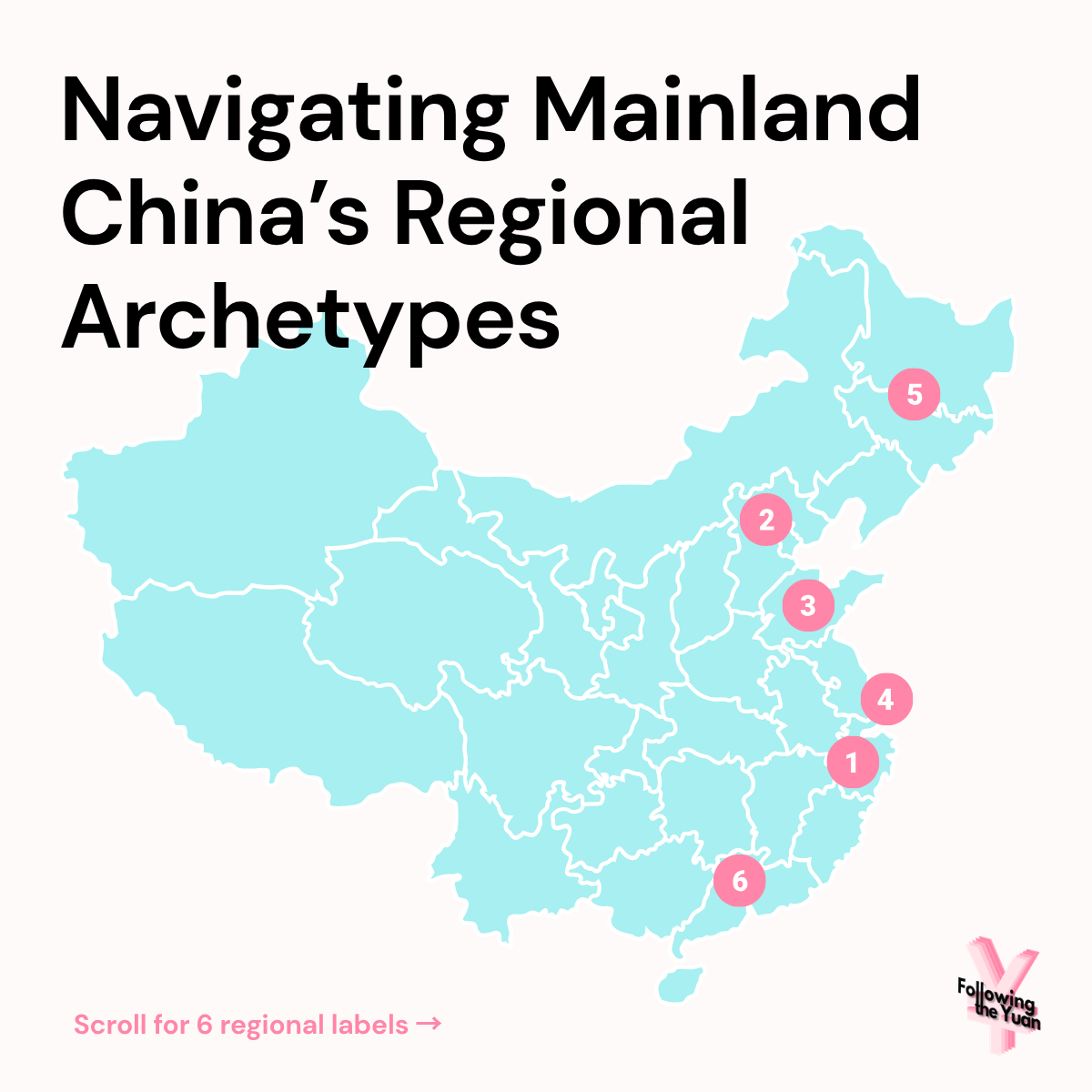
We want to bring you six of them today, most of which are rooted in the coastal regions. We hope they can open conversations and be a starting point for further curiosity.
江浙沪独生女 Only Daughter in Jiangsu, Zhejiang & Shanghai
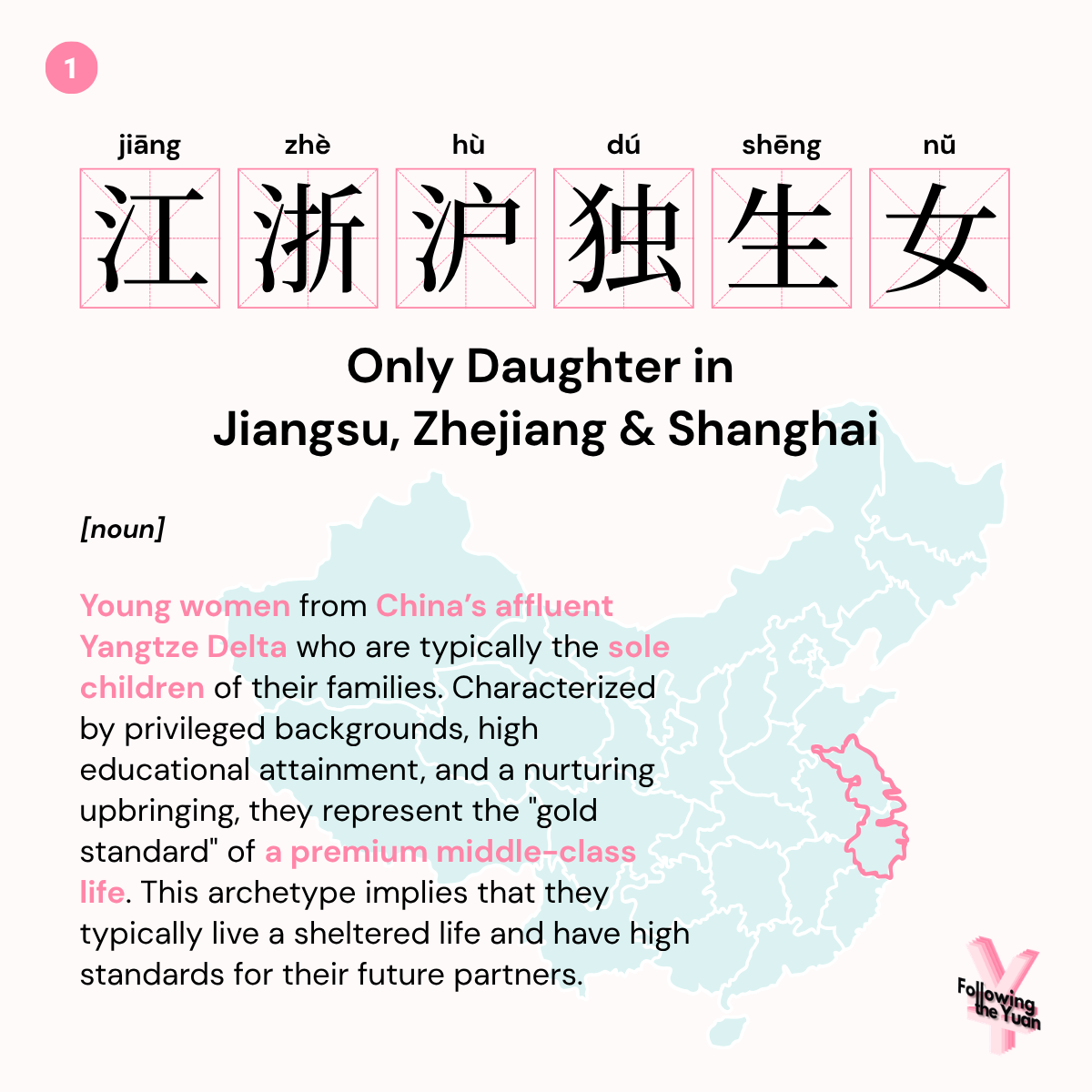
Definition: Young women from China’s affluent Yangtze Delta who are typically the sole children of their families. Characterized by privileged backgrounds, high educational attainment, and a nurturing upbringing, they represent the “gold standard” of a middle-class life. This image prioritizes aesthetics and lifestyle, while implying that they typically live a sheltered life and have high standards for their future partners.
Origin: Emerged as a viral cultural trope in the summer of 2023 (approx. June–August) on lifestyle platforms like RedNote. It represents the intersection of the One-Child Policy’s legacy—which saw its strictest implementation in the Yangtze River Delta—and the region’s concentrated private wealth.
Read about it in media: 三联生活周刊 (Sanlian Lifeweek) 2023/08/04 江浙沪独生女,打工人最眼红的顶配人设?(“Only daughters from Jiangsu–Zhejiang–Shanghai: the ultimate life setup that makes working people jealous?”)
Trending post on RedNote 江浙沪独生女,下辈子的投胎第一志愿 (“Jiangsu–Zhejiang–Shanghai only daughters: my top choice for reincarnation in the next life”)
界面文化(Jiemian Culture) 2023/08/20 “江浙沪独生女”真的值得羡慕吗?| 编辑部聊天室 (“Are ‘Jiangsu–Zhejiang–Shanghai only daughters’ really worth envying? | Editorial Roundtable”)
北京土著/京爷 Native Beijinger / Jing Ye
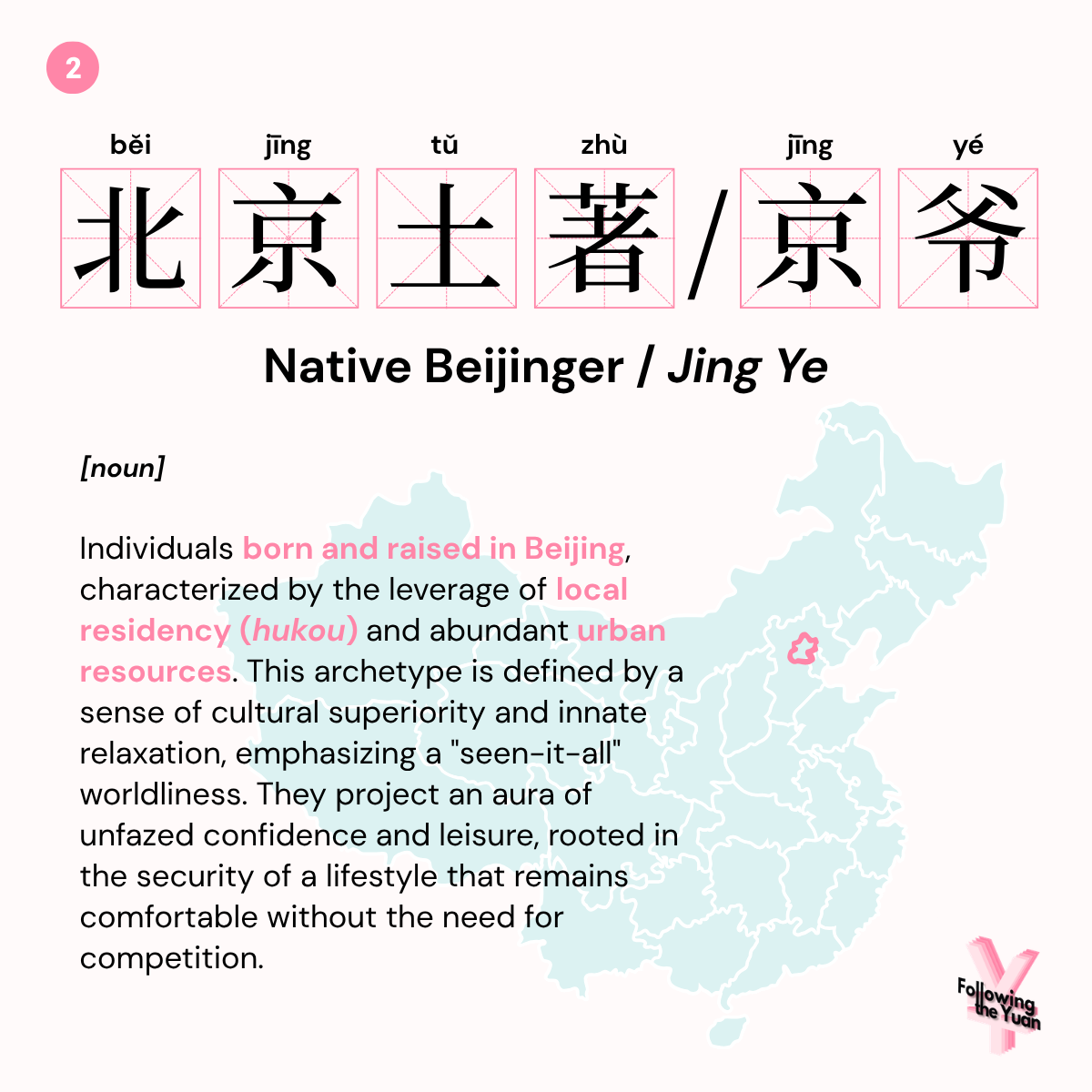
Definition: Individuals born and raised in Beijing, characterized by the leverage of local residency (hukou) and abundant urban resources. This archetype is defined by a sense of cultural superiority and innate relaxation, emphasizing a “seen-it-all” worldliness. They project an aura of unfazed confidence and leisure, rooted in the security of a lifestyle that remains comfortable without the need for intense social competition.
Origin:
Beijing Native (北京土著): Primarily a self-identifier, this term carries a strong sense of local belonging and cultural identity. The term “Native” gained popularity in the early days of the Chinese internet (circa 2005–2010). Its original purpose was to distinguish “Old Beijingers” (multi-generational locals) from “New Beijingers” (migrants or Bei Piao).
“Jing Ye” (京爷): Predominantly a name used by outsiders, often functioning as a derogatory label with ironic and sarcastic undertones. The term “Jing Ye” exploded in popularity between late 2022 and early 2023, fueled by the viral nature of short-video platforms. It evolved into a symbol of social critique and regional stereotyping.
Read about it in media: 三联生活实验室 (Sanlian Life Lab) 2025/11/18 谈恋爱遇到“北京爷们”,已老实 (“Dating a Jing Ye: I’ve learned my lesson”)
ONE文艺生活 (ONE Literary Life) 2025/06/18 为啥北京人不管几岁都是孩子?(“Why are Beijingers, no matter their age, still like kids?”)
Trending post on RedNote 宝宝,你是一个京爷 (“Baby, you’re a true Jing ye”)
山东公务员 Shandong Civil Servant
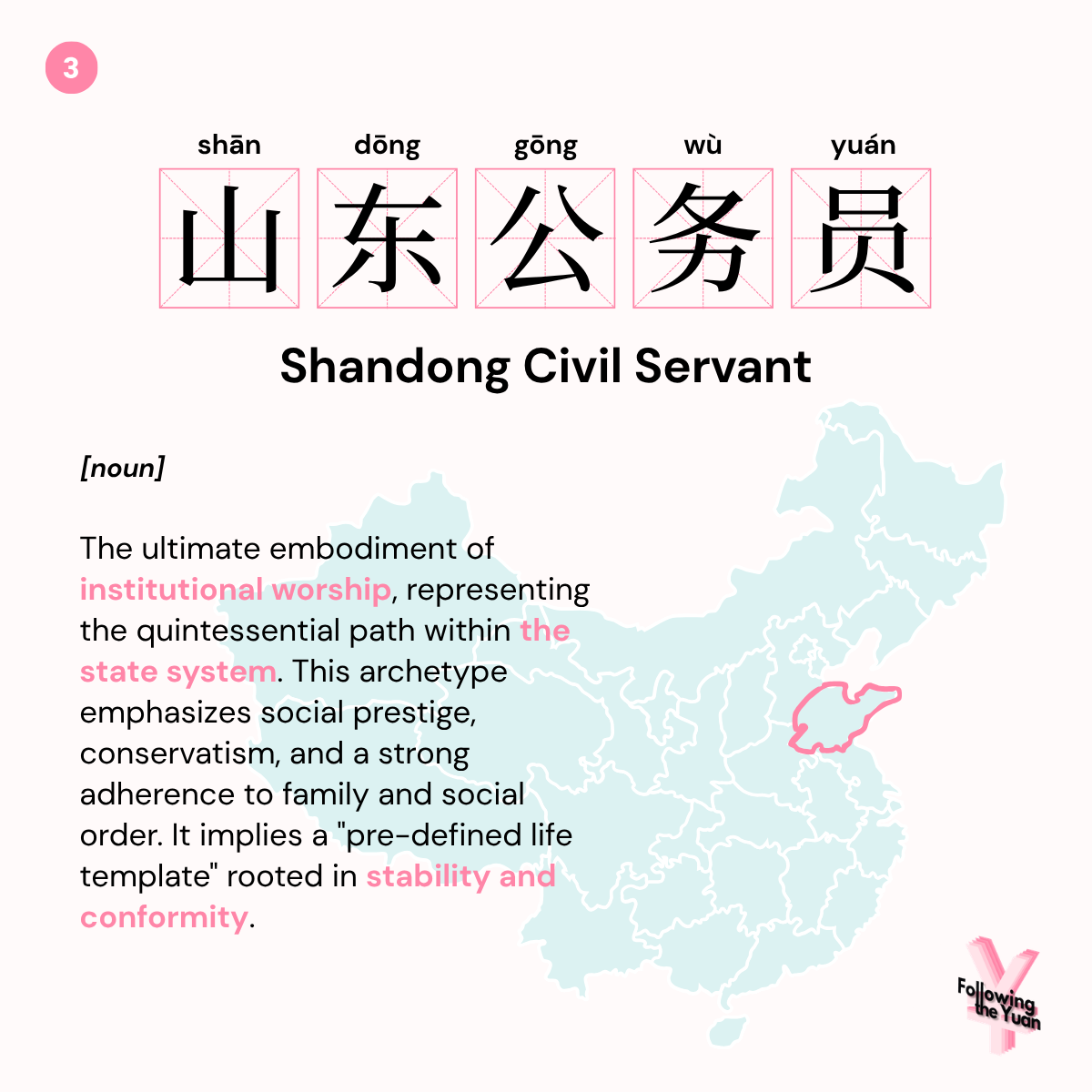
Definition: The ultimate embodiment of institutional worship, representing the quintessential middle-class path within the state system. This archetype emphasizes social prestige, conservatism, and a strong adherence to family and social order. It implies a “pre-defined life template” rooted in stability and conformity.
Origin: Rooted in the long-standing Confucian tradition of “studying to become an official” (Xue Er You Ze Shi). It evolved into a viral internet phenomenon around 2020–2021 amidst increasing global economic uncertainty.
Read about it in media: 每日人物 (Renwu Magazine) 2023/04/02 山东考公团,战遍江浙沪 “The Shandong civil service exam army: conquering Jiangsu–Zhejiang–Shanghai”
Trending post on RedNote 山东考公现状 “The current state of Shandong civil service exam takers”
沪上名媛/沪少/上海老克勒 Shanghai Socialite/ Shanghai Young Master / Shanghai Old Clerk
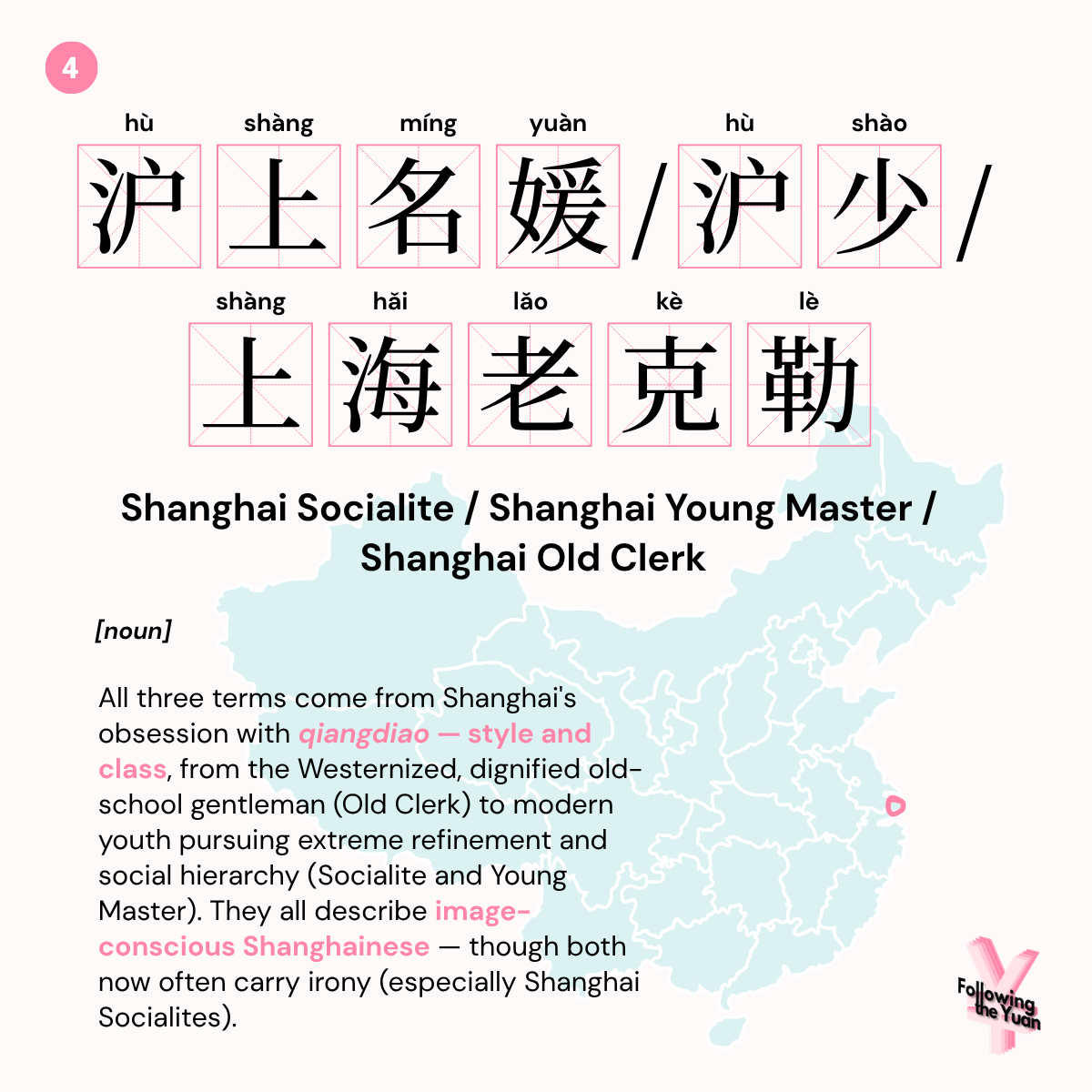
Definition: All three terms come from Shanghai’s obsession with qiangdiao — style and class, from the Westernized, dignified old-school gentleman (Old Clerk) to modern youth pursuing extreme refinement and social hierarchy (Socialite and Young Master). They all describe image-conscious, taste-driven Shanghainese — though both now often carry irony (especially Shanghai Socialites).
Origin: 老克勒 dates back to the early 20th century in Old Shanghai, derived from the English word “clerk.” It originally referred to a generation of Westernized elites who embraced a sophisticated, jazz-age lifestyle. In contrast, “Shanghai Socialite” (沪上名媛) and “Young Master” (沪少) resurfaced and became viral on social media around 2020–2021, following the infamous “Shanghai Socialite Group” (上海名媛群) exposé.
Read about it in media: 豆瓣笔记 (Douban Note):老克勒:上世纪二三十年代最潮的人 (“‘Old Clerk’ the trendiest people of 1920s–30s Shanghai”)
Trending post on RedNote 上海话:老克勒是什么意思?(“Shanghainese: what does ‘Old Clerk’ mean?”)
南风窗 (South Reviews) 2020/10/28 上海,以及名媛 (“Shanghai, and the ‘socialites’”)
谷雨实验室 (Guyu Lab by Tencent) 2020/10/15 她们,曾想在上海这样养成“名媛”|谷雨影像 (“They once tried to cultivate themselves into ‘socialites’ in Shanghai | Guyu Visual”)
东北老铁 Northeast Homie
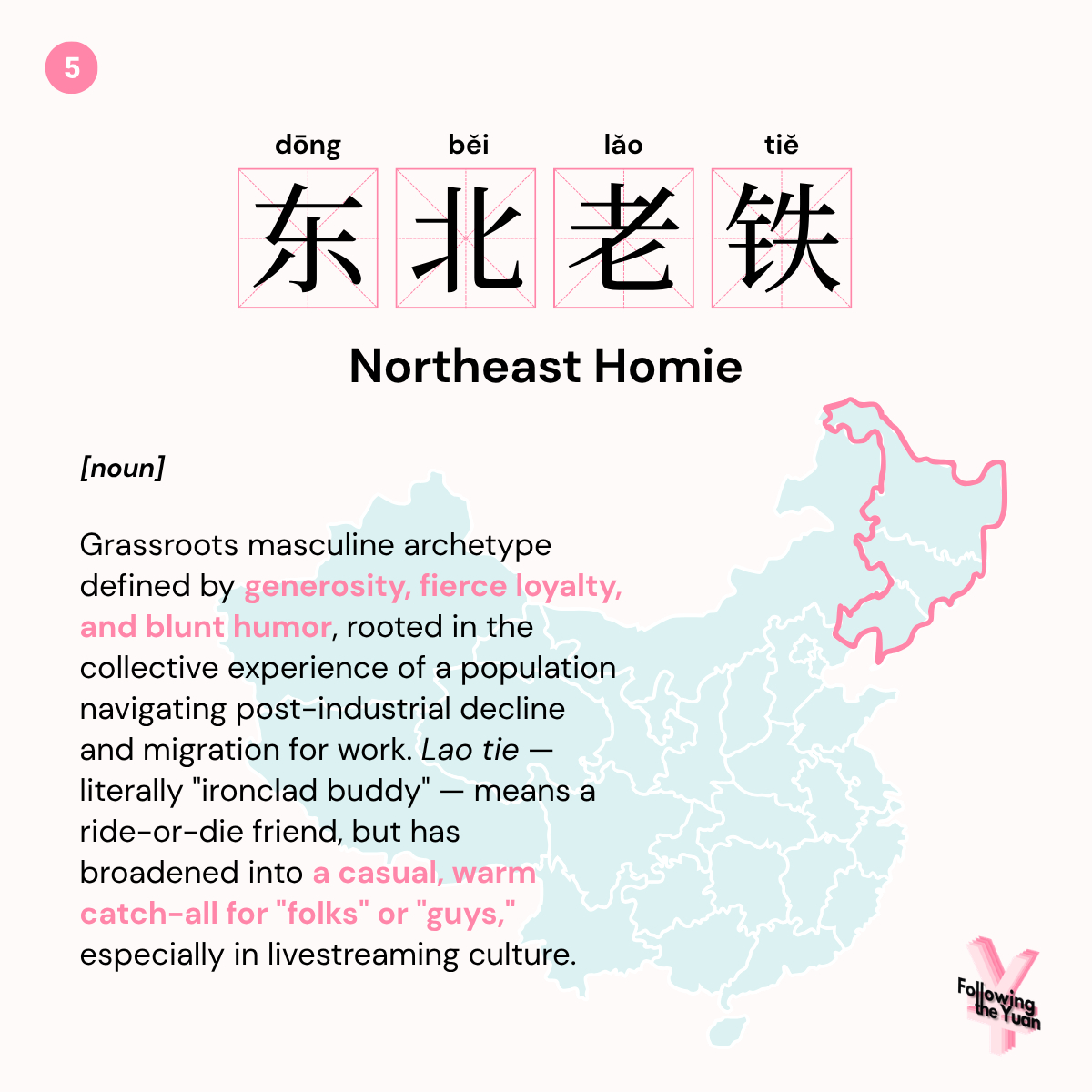
Definition: Grassroots masculine archetype characterized by generosity, unwavering loyalty, and a blunt sense of humor. This identity is often intertwined with the collective nostalgia of a population navigating post-industrial economic transition and widespread migration for work. Lao tie literally means “ironclad buddy” in Northeastern Chinese dialect — a ride-or-die friend — but has since broadened into a casual, warm-toned catch-all for “folks” or “guys,” especially in livestreaming culture.
Origin: Emerged in the mid-2010s (2014–2016) from the early ecosystem of short-video and live-streaming platforms (notably Kuaishou).
Read about it in media: 环球财富网 (Global Fortune Network) 2017/02/22 快手热词“扎心了老铁”入榜2017年度十大网络用语 (“Kuaishou buzzword ‘That really hits home, bro (zhāxīn le, lǎotiě)’makes the Top 10 Internet slang of 2017”)
语言学午餐Linguistics Lunch 2017/04/16 扎心了,老铁——如何像东北人一样优雅地使用“老铁”一词丨语言学午餐 (2017/02/22) “‘That hit deep, bro’ — how to elegantly use the term ‘laotie’ like a Northeasterner”
北漂/沪漂/深漂 Beijing/Shanghai/Shenzhen Drifters
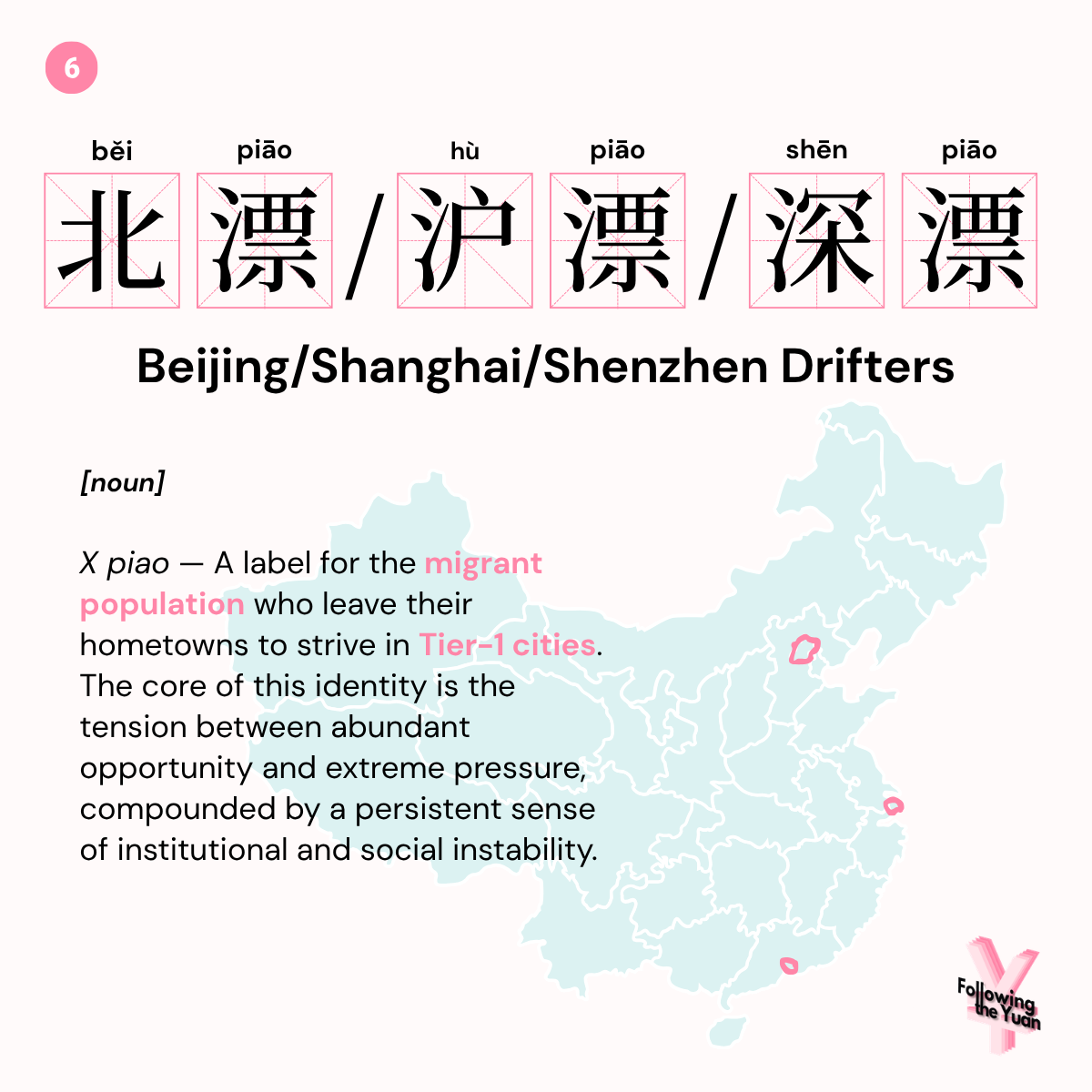
Definition: A label for the migrant population who leave their hometowns to strive in Tier-1 cities. The core of this identity is the tension between abundant opportunity and extreme pressure, compounded by a persistent sense of institutional and social instability.
Origin: The term “ X Piao” gained widespread social recognition in the late 1990s and early 2000s, coinciding with the massive internal migration toward Tier-1 cities.
Read about it in media: 小红书热帖 (Trending post on RedNote) 北京土著和北漂的两种不同的生活状态 “Two completely different lifestyles: Beijing natives vs. migrants”
智族Life (GQ Life) 2019/06/25 家在回龙观,城市异乡人 “Home in Huilongguan: urban outsiders”
Great read!
没有广州还是不够全面