


While AI leaders in the U.S. are having a collective reckoning about AI safety, China’s AI giants are confronting a less existential problem: Their trick from their old playbook might not work.
The trick sounds simple: build a super-app gateway, hook users with free products, then monetize through advertising and e-commerce conversion. In the AI era, that means pouring tens of billions of RMB into Lunar New Year red-envelope battles, cash giveaways, and free bubble-tea vouchers — turning China into one of the world’s largest markets for consumer AI adoption. (As the end of 2025, 80% and 77% of Chinese respondents used AI in their personal and work-related scenarios at least once a week, respectively, compared to 54% for both personal and work use in the U.S. according to a Morgan Stanley survey.)

They have done this to “occupy the user’s mindshare,” said tech writer Afra Wang, using a phrase Chinese tech circles love. “Like their American counterparts, a lot of Chinese tech companies see AI as a technological paradigm shift…that is the logic that defines these companies’ evaluations.”
Tencent, Alibaba’s capital expenditure all spent around 50-70 billion RMB in the last quarter, ByteDance plans to spend as high as 70 billion USD in 2026, mostly on compute purchases and data centers. This past week, US research firm Rhodium Group estimated that China’s major AI foundation model companies generate only about 10% of OpenAI and Anthropic’s recently reported combined revenue each year.
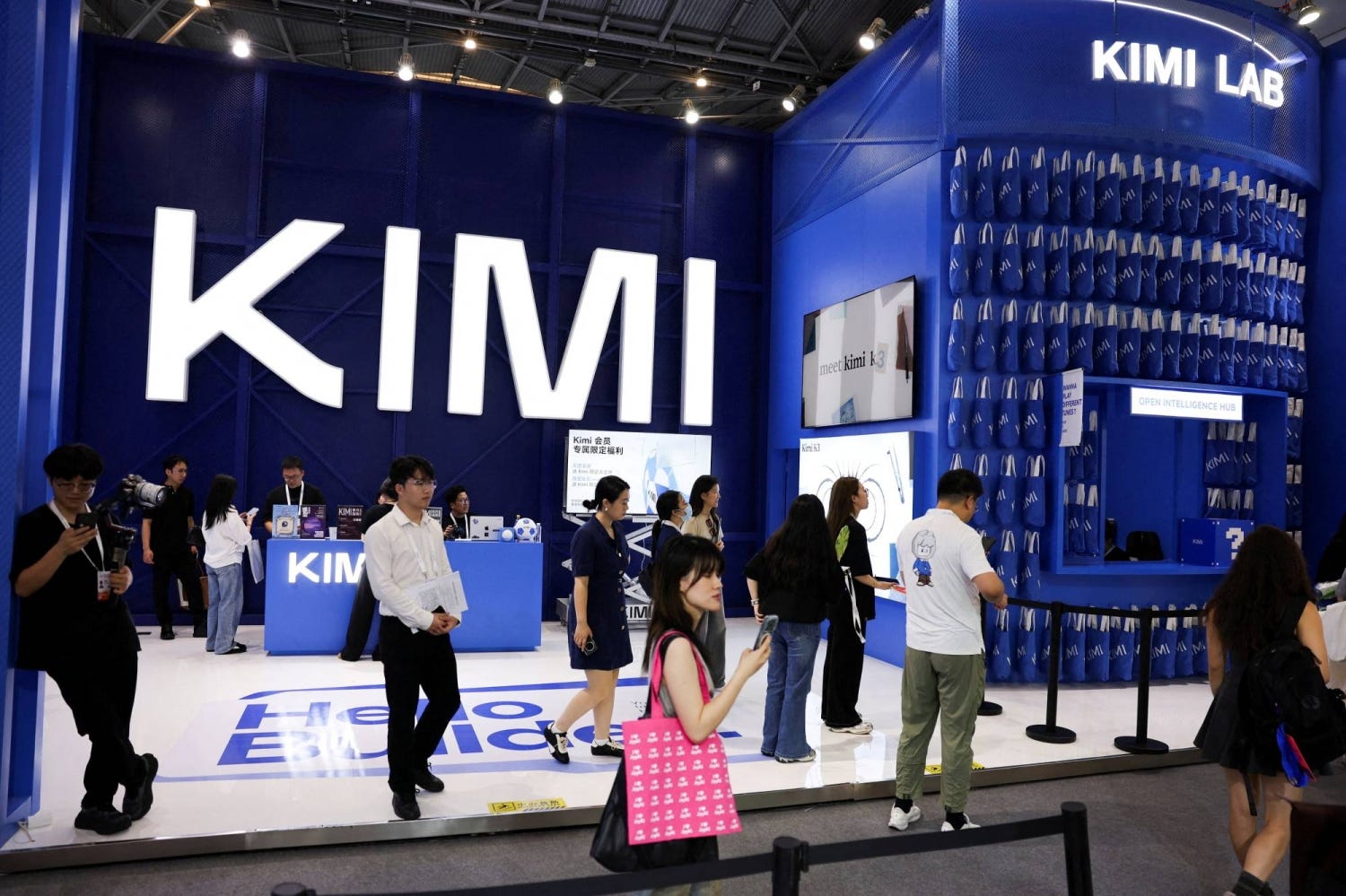
This free-to-enter tactic got 22-year-old Jiayi Li into the door with Kimi. When she was doing his master’s program, she consumed more Kimi because Kimi gave him a lot of vouchers for membership and tokens. After trying out various models, Kimi is the only monthly subscription that she currently keeps.
Jian Hu, 24, works in a technical role at ByteDance, often uses Codex, GPT, and Trae. He can use his ByteDance’s own tools for free and have half of his spending on AI tokens outside of that reimbursed.
However, to more mainstream users who do not see AI as a must for their work, the willingness to pay, or pay for what it’s worth, remains low.
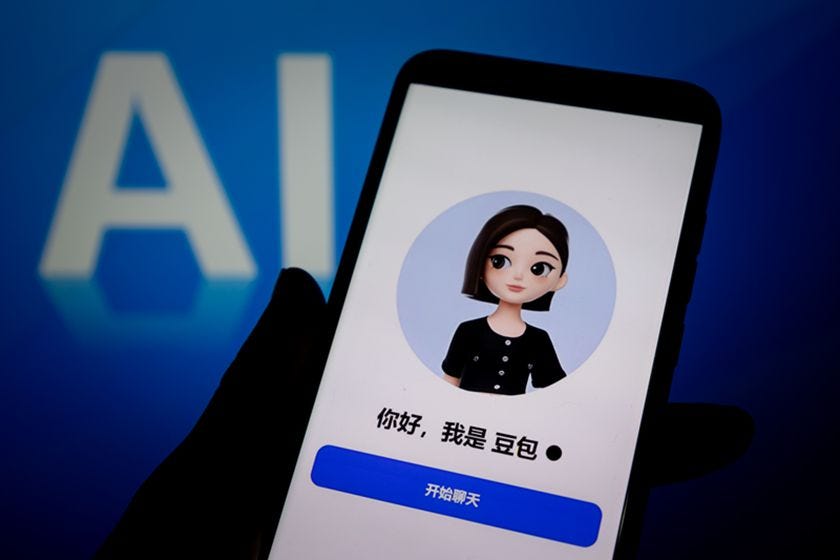
Zisheng Li, a 78-year-old retiree based in Beijing, thought a reasonable price for Doubao would be no more than 10 RMB a month. “Even without AI, I could find the information I care about — Chinese history, current affairs, and common sense questions in a book,” he added.
“If I don’t have AI, I can always use Baidu,” said 50-year-old Chunmei Wu based in Hengyang, Hunan province, who downloaded Doubao after seeing its ads. A free version is more than enough for her, she told us.
Since launching in 2023, ByteDance’s Doubao has been known as a replacement of China’s search engine Baidu, and remained free until this June. Its monthly active users (MAU) fell by 6.1 million in May after news broke that the app would introduce a subscription option, according to AI market tracking firm aicpb.com.
This got us thinking: if tech companies haven’t found their answer through this experimentation, all to find a market of customers who are not keen to pay — what does it mean for the society?
“Technology bubbles tend to happen with any technology boom”, said James Wang, a general partner at US-based Creative Ventures and author of the book What You Need To Know About AI, referring to the process of building railroads in the 19th century, and the fiber optic cable laid during the dot-come era. “Over investment is pretty much inevitable. It’s a new technology, and you have no idea how big it can get,” Wang said.
He may be right that it’s too early to know whether this bet ever pays off. But perhaps we’ve been asking the wrong question from the start: by putting our focus on business and making money, we tend to ignore other costs and risks that come with it.
Chinese regulators only started to respond now on the environmental part. As the very first a framework for improving compute infrastructure efficiency, on September 4th, seven Chinese government bodies, including the Cyberspace Administration of China, and the Ministry of Ecology and Environment, jointly issued the “Implementation Plan for Promoting the Coordinated Transformation of Digitalization and Greening (2026–2030).”
The AI safety issue, meanwhile, has not registered much in China. Whether China’s AI giants shift their business model might take years, but it’s never too early to discuss water, electricity, and compute it’s already burning through.
Production: Rongrong Zhuge