


Editor’s notes:
Following our issue in April about regional archetypes (e.g. Only Daughter in Jiangsu, Zhejiang & Shanghai, Northeast Homie, etc.), we're back, this time focusing on China's socioeconomic stereotypes including:
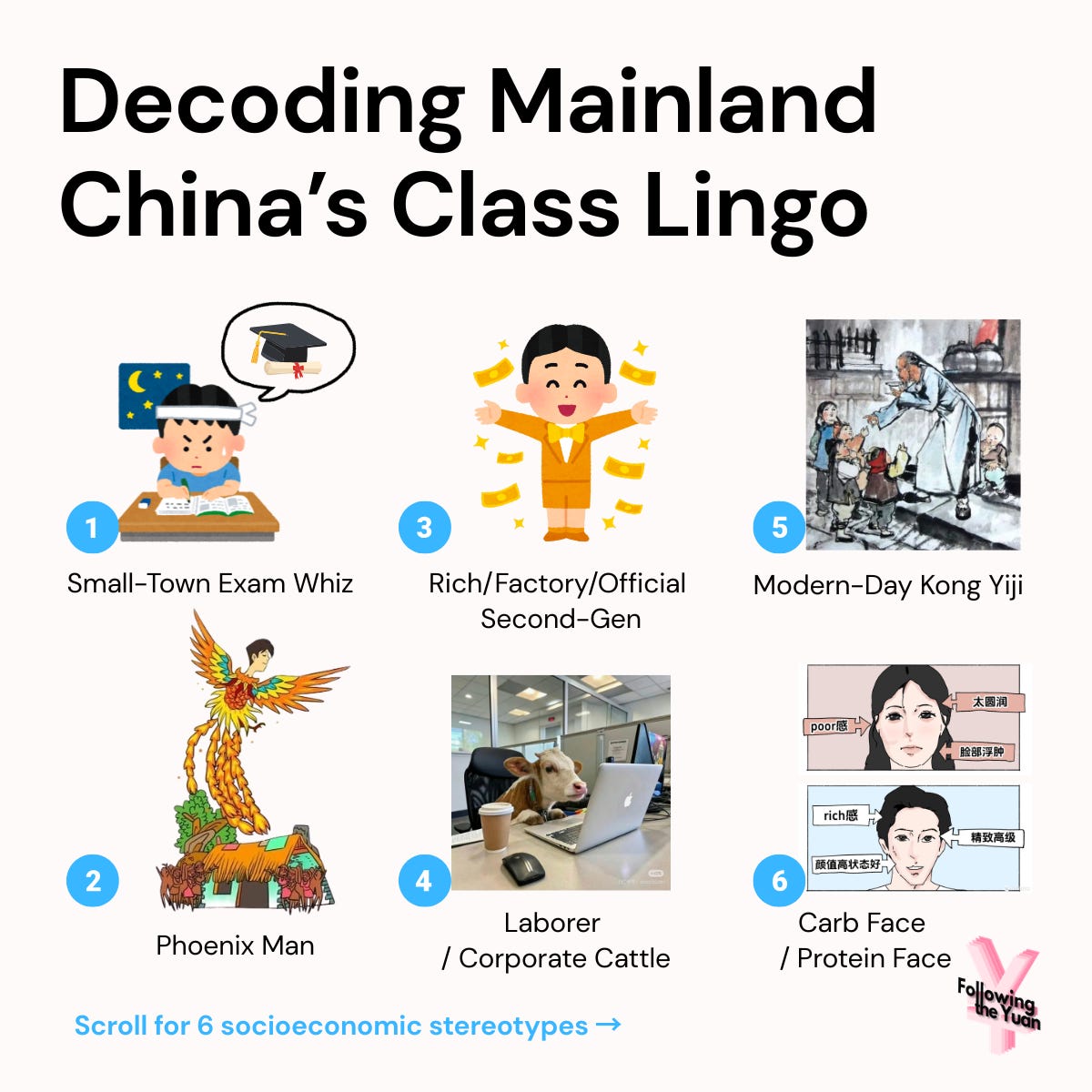
小镇做题家 Small-Town Exam Whiz
凤凰男 Phoenix Man
富二代/厂二代/官二代 Rich/Factory/Official Second-Gen
打工人/牛马 Laborer / Corporate Cattle
当代孔乙己 Modern-Day Kong Yiji
碳水脸/蛋白脸 Carb Face / Protein Face
For each term, we explain the definition, the origin, and provide links to reading more in media/social media.
Before diving in, I want to reiterate why we gather these together:
From the outside, China has still largely been seen as a monolith: people on this vast land think and act in unison under the one Party rule. Inside of China, however, people from different parts of the country take genuine pleasure in learning about and debating these archetypes and stereotypes. They can be the start of a deeper understanding.
There are practices where people introduce stereotypes and archetypes without context, and I'm personally strongly opposed to that. Instead, I hope these terms open conversations and spark curiosity, and serve a practical purpose too, for Chinese-language learners who might otherwise blank out when they run into these terms.
小镇做题家 Small-Town Exam Whiz
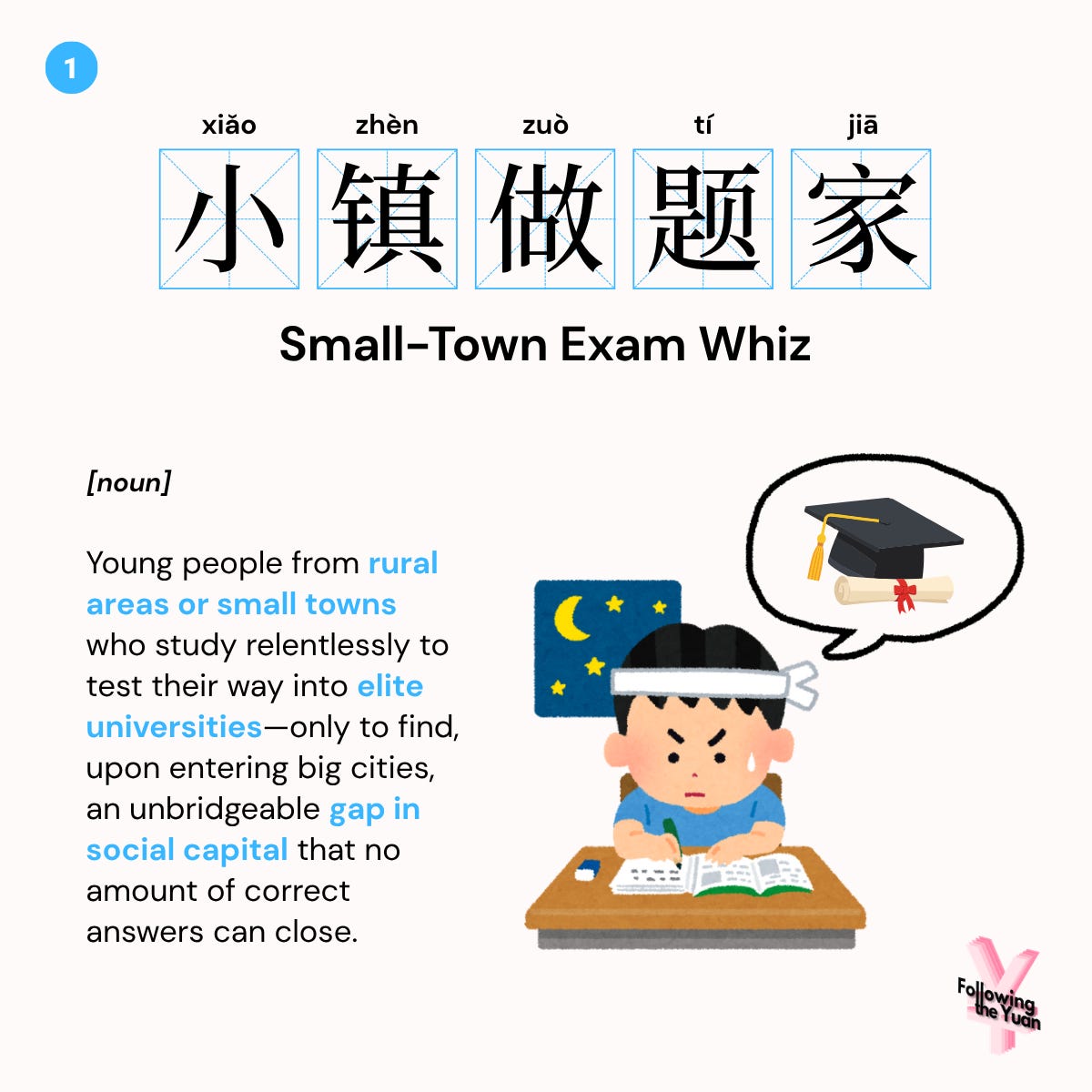
Definition: People from rural areas or small towns who study relentlessly to test their way into elite universities—only to find, upon entering big cities, an unbridgeable gap in social capital that no amount of correct answers can close.
Origin: The term originated in May 2020 from the Douban group “985 废物引进计划” (985 Loser Recruitment Plan), a support group for graduates from China’s elite universities who felt left behind. It entered broad public view a month later, quickly went viral, capturing a widespread structural anxiety over diminishing upward mobility despite high academic achievements. In July 2022, it surged again amid controversy over singer and actor Jackson Yee securing a coveted, stable job at the state-funded National Theatre of China.
Read about it in media: 真实故事计划 (Real Story Project) 2020/06/03 小镇做题家:一个211高校学生的命运陷阱 (”Small-town exam whiz: the fate trap of a 211-university student”)
光明日报《青年说》(Guangming Daily, “Youth Talk”) 2020/08/09 把自信紧握在手上,”小镇做题家” (”Holding tight to confidence in hand: the ‘small-town exam whiz’”)
小红书 (RedNote) 2022/08/19 小镇做题家,我只做到了前四个字 (”Small-town exam whiz, I only made it as the ‘small-town exam taker’”)
